Ask The Art Story AI


Summary of Psychoanalysis and Art
Psychoanalysis and art struck up a poignant relationship in the early 20th century as artists absorbed the new language of the unconscious introduced by Sigmund Freud and later Carl Jung. Freud’s theories of repression, dream symbolism, and sublimation gave artists permission to treat artmaking as a direct outlet for hidden drives and forbidden desires, while Jung’s ideas of archetypes and a collective unconscious opened a pathway to universal myth and ritual. Rather than simply illustrating psychological theories, artists experimented with methods like free association, dream transcription, and automatic drawing that attempted to bypass rational control and tap the psyche itself. This approach encouraged imagery drawn from sexuality, childhood trauma, and primal fantasy, positioning the artwork as both confession and investigation.
The movement shaped some of the most influential developments of modern art. Dada and Surrealism adopted automatism and dream logic; Abstract Expressionists such as Jackson Pollock transformed action painting into a physical encounter with unconscious gesture; and later feminist and performance artists turned psychoanalytic ideas toward the body, identity, and the destabilizing power of the gaze. Across these varied practices, psychoanalysis and art made the inner life of both artist and viewer a legitimate subject of modern creativity.
Key Ideas & Accomplishments
- Psychoanalysis and art permanently altered the role of the artist by transforming the studio into a site of psychological inquiry, where making an artwork became as much an act of self-analysis as of formal invention.
- It introduced a critical vocabulary with concepts such as the gaze, abjection, and the mirror stage that enabled later generations to interrogate power, gender, and identity in ways that went far beyond the early experiments of the avant-garde.
- By combining art with the ideas of psychology, the movement connected visual work to philosophy and culture, allowing art to join wider discussions about how people understand themselves and society instead of being purely an aesthetic pursuit.
- Its emphasis on unconscious drives also helped to normalize themes of sexuality, desire, and trauma in mainstream exhibitions, expanding the moral and emotional territory that modern art could claim.
Overview of Psychoanalysis and Art
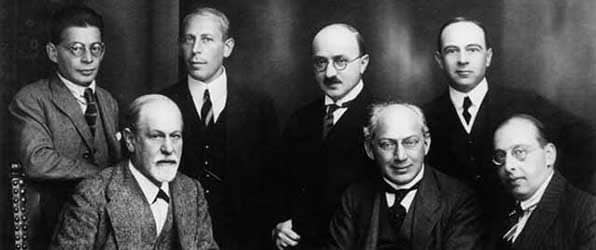
How can art reveal the unconscious mind? What are the contributions and limits of Freud’s psychoanalysis in art history? What theories extend beyond Freud? Explore how artists delve into the hidden depths of the human psyche.
Artworks and Artists of Psychoanalysis and Art
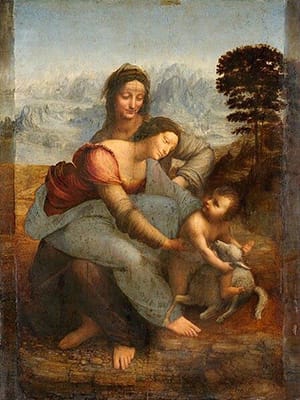
Virgin and Child with St. Anne (retouched)
Leonardo da Vinci’s Virgin and Child with St. Anne became the subject of one of the earliest and most famous attempts to apply psychoanalysis to art. In a 1910 essay, Sigmund Freud argued that artworks can reveal an artist’s hidden motives and unconscious desires. Drawing on a passage from Leonardo’s notebooks, he suggested that details of Leonardo’s childhood pointed to a “passive homosexuality,” but he also admitted that the historical evidence was incomplete. Freud wrote, “If such an enterprise, as perhaps in Leonardo’s case, does not yield certain results, the fault lies not in the faulty or inadequate methodology of psychoanalysis, but in the uncertainty and incompleteness of the material which tradition provides for this person,” meaning that if his interpretation didn’t quite fit, the problem was the lack of solid biographical data not psychoanalysis itself.
A key part of Freud’s argument rested on what he believed was a vulture symbol in the painting, which he read as a sign of maternal love and early sexual fantasy. Freud’s student Oskar Pfister even claimed to see the outline of a vulture hidden in the folds of Mary’s robe, its tail touching the Christ child’s lips, reinforcing Freud’s idea of a childhood memory in which a bird put its tail in Leonardo’s mouth. But this entire chain of reasoning hinged on a translation error: in Leonardo’s notebook the Italian word nibbio actually means kite (a type of hawk), not vulture. Later scholars showed that no deliberate vulture exists in the painting. The “shape” is just drapery; Freud built his theory on a mistaken word and an imaginative projection.
Despite these flaws, Freud’s essay remains historically important. It demonstrated how psychoanalysis could be used to interpret art and inspired later artists and critics, including the Surrealists, even though the specific claims about Leonardo’s sexuality and the hidden vulture have long been discredited.
Oil on panel - Louvre, Paris
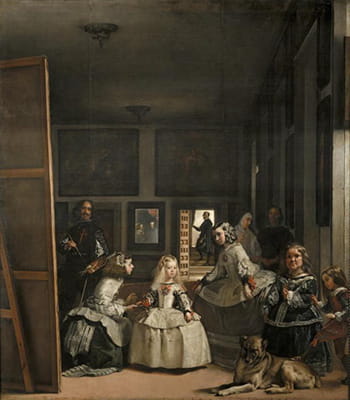
Las Meninas
Las Meninas, completed in 1656, became a favorite subject for psychoanalytic interpretation because of what it revealed about seeing, being seen, and the formation of identity. It is not just a masterpiece of Baroque art but also a complex exploration of perception, reality, and the relationship between the observer and the observed. For Lacan, the painting represents one of the four fundamental objects of psychoanalysis, specifically the gaze. This concept is pivotal in Lacan’s psychoanalytic theory, which posits that our sense of self and reality is deeply intertwined with how we are perceived by others. Lacan read Las Meninas as a picture of the hidden tension in French philosopher Rene Descartes’ famous phrase “I think, therefore I am.” Instead of treating self-awareness as something clear and certain, he saw the painting as showing that who we are is shaped not only by our own thoughts but also by the fact that we know we’re being looked at. In other words, our sense of self comes from both thinking and being seen, and that double awareness makes identity more complicated than Descartes’ simple statement suggests.
Lacan’s analysis contrasts traditional interpretations that center on the reflection of the Spanish royal couple in the mirror at the painting’s center, which assumes Diego Velázquez is depicting himself painting his royal patrons. Instead, he highlights the inconsistency in perspective, an anomaly in the otherwise meticulously accurate composition. By focusing on the canvas, which shows only its back, Lacan suggests that Velázquez, who gazes directly at the viewer, implies that the front of his canvas might reflect our own image, emphasizing the interplay between observer and observed. This interplay illustrates Lacan’s concept of the objet petit a, or the unattainable object of desire, which in this context is the viewer’s own gaze being returned by the painting.
In the exhibition catalog, psychoanalyst Gérard Wajcman notes that Lacan might have interpreted the painting as “nothing less than a theory of psychoanalysis” itself. This insight is particularly significant, as it is rare to see complex theoretical ideas conveyed with such clarity in a visual medium, especially from a thinker whose writings often border on the impenetrable. The painting becomes a mirror reflecting not only the royal subjects but also the viewers, drawing them into a deeper psychological and philosophical discourse about perception, reality, and the unconscious.
Oil on canvas - Museo del Prado, Madrid
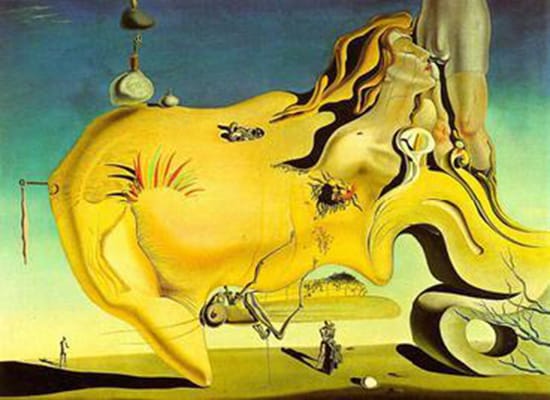
The Great Masturbator
Salvador Dalí’s The Great Masturbator is notable for its intricate, dream-like imagery and its exploration of sexuality, desire, and identity. The piece delves into the subconscious mind, representing fears and fantasies with a vivid, almost hallucinatory clarity. The central image features an upside-down face, believed to be Dalí’s own, with a woman’s face, identified as his wife Gala, emerging from the back. Her mouth is positioned near a male crotch, depicted only from the waist down, with legs appearing freshly cut and bleeding. Smaller, crucial details throughout the painting further enrich its complex symbolism.
Dalí had a significant fear of grasshoppers and suffered from “delusional parasitosis,” a condition where he believed insects were crawling on his skin. These phobias symbolized decay and sexual aversion, stemming from a childhood incident where his father showed him a book about venereal diseases. This traumatic experience instilled in him a deep aversion to sexual intercourse and female genitalia, which he later expressed in his art through motifs such as insects, eggs, and explicit sexual imagery.
Dalí painted The Great Masturbator after his marriage to Gala Éluard. Art critic Nathaniel Harris notes that Dalí claimed the painting was inspired by a 19th-century depiction of a woman smelling an arum lily. Dalí was a virgin when he met Gala, preferring masturbation, a theme evident in The Great Masturbator. Gala played a pivotal role in transforming the artist’s views and experiences of sexual intercourse.
The main image in the foreground of the painting was inspired by a rock formation at Cap de Creus in Catalonia, a place Dalí described as his “permanent inspiration” and the only place where he felt loved. He himself explained: “When I painted that rock that I entitled ‘The Great Masturbator,’ I did nothing more than render homage to one of the promontories of my kingdom, and my painting was a hymn to one of the jewels of my crown.” This painting not only reveals Dalí’s mastery of surrealist techniques but also contributes to the dialogue between art and psychoanalysis, exploring human emotions and desires through phantasmagoric imagery.
Oil on canvas - Museo Nacional Centro de Arte Reina Sofía, Madrid

Untitled (Psychoanalytic Drawing)
Untitled (Psychoanalytic Drawing) exemplifies Jackson Pollock’s engagement with Jungian psychoanalysis during a critical period of his life. The drawing features a complex array of abstract forms and symbols, including references to Indigenous cultures and recurring hermaphroditic figures, evoking ideas of individuation and the collective unconscious. Pollock himself later acknowledged the influence of the unconscious in his work, stating, “I’m a little representational all the time. But when you’re painting out of your unconscious, figures are bound to emerge.”
Known for his lifelong mental health struggles, Pollock exhibited psychological issues from an early age, including delayed speech and excessive alcohol consumption. By the time he sought therapy, his symptoms had escalated to rapid mood swings, violence, visual disturbances, impulsivity, antisocial behavior, and suicidal ideation. Under the care of Joseph Henderson, a young psychiatrist trained by Carl Jung, Pollock entered Jungian analysis after being hospitalized for alcoholism. Henderson, recognizing Pollock’s difficulty with verbal expression, encouraged him to draw as a nonverbal form of free association.
In 1970, Henderson presented Pollock’s drawings to the San Francisco Psychoanalytic Institute, suggesting that they had facilitated Pollock’s exploration of his unconscious mind. These drawings were then sold to finance Henderson’s research and were publicly exhibited. Lee Krasner, Pollock’s widow, sued Henderson for violating Pollock’s privacy due to the confidential nature of the drawings. Although the lawsuit was ultimately dismissed, Claude Cernuschi, author of Jackson Pollock: “Psychoanalytic” Drawings (2023), emphasized that the legal dispute should influence the interpretation of the drawings, highlighting the controversial aspects of using psychoanalytic methods in art historical analysis. Cernuschi’s analysis of these works offers a new taxonomy and critical perspective, enriching our understanding of Pollock’s art and its psychoanalytic dimensions.
Colored pencil on paper - The Metropolitan Museum of Art, New York

Infinity Mirror Room
Yayoi Kusama’s Infinity Mirror Rooms are immersive installations in which mirrored walls, ceilings, and floors reflect lights, objects, and visitors in endless repetition to create an illusion of boundless space. One of the earliest, in 1965, filled the floor with soft, stuffed fabric forms covered in Kusama’s signature polka dots and multiplied them to infinity through mirrors. The result is both dazzling and disorienting, as shapes seem to expand outward without limit.
Inside these mirrored chambers, viewers stand amid infinite reflections and repeating patterns until the boundary between self and environment begins to blur. One sees their own image scattered among the dots and forms, sometimes indistinguishable from them, producing a hypnotic sensation of self-dissolution. Kusama has described lifelong hallucinations of multiplying dots and talking flowers; the installations externalize this inner world of obsessive repetition, echoing psychoanalytic ideas of intrusive thoughts and compulsive neurosis.
Psychoanalysis also explores the loss of stable identity and the formation of the ego through mirrors and observation. Kusama’s rooms embody these concepts: visitors become both observer and object, reflected endlessly while being watched by others. This dynamic recalls Lacan’s “mirror stage,” in which selfhood emerges through recognition of one’s own image, and it evokes Freudian and Jungian notions of the self, dissolving into the unconscious or the collective.
The mirrored space goes beyond visual spectacle to act as a psychological arena. By engulfing viewers in repeating forms and infinite reflections, the rooms bypass conscious control and evoke dreamlike or hallucinatory states. Dots and mirrored figures become more than decorative pattern; they suggest multiplicity, cosmic infinity, and archetypal symbols of the unconscious. Kusama thus transforms personal obsession into a shared encounter with the limitless psyche, linking her art to the broader history of psychoanalysis and its exploration of desire, identity, and the fragile boundary between inner and outer worlds.
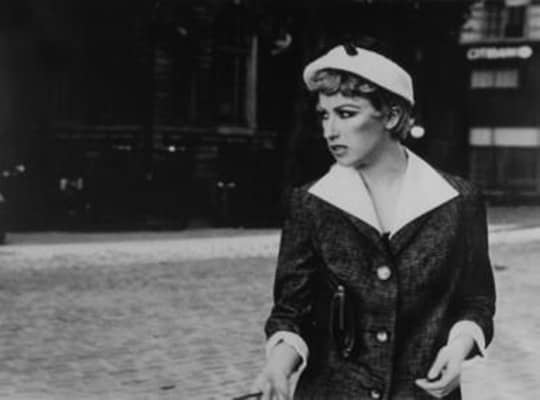
Untitled Film Still #23
Cindy Sherman’s Untitled Film Still #23 (1978) is an important example of her photography work, which combines staging and performance to interrogate identity and representation. In this black-and-white photograph, she portrays a woman (herself) in a vintage outfit, seemingly caught in a moment of narrative tension. The composition is carefully constructed to mimic a movie still, with Sherman’s character appearing both poised and vulnerable, her expression conveying a mixture of anxiety and determination.
The significance of this work lies in its ability to challenge and deconstruct traditional representations of women in media. By embodying various female archetypes from popular culture, Sherman critiques the stereotypical roles assigned to women in films and society. Her work invites viewers to question the authenticity of these portrayals and the ways in which identity is constructed and performed. Sherman’s deliberate ambiguity in the narrative of each film still encourages viewers to project their own interpretations and confront their preconceptions about gender and identity.
From a psychoanalytic perspective, Sherman’s Untitled Film Still #23 can be seen as a visual exploration of the concept of the gaze, particularly the male gaze, as articulated by feminist film theorist Laura Mulvey. By assuming the role of both creator and subject, Sherman disrupts the traditional power dynamics between the viewer and the viewed. Mulvey argues that Sherman’s work engages in a “chameleon-like” transformation, where the artist adopts different personas to expose and critique the ways in which women’s images are constructed and consumed. By doing so, Sherman not only mimics but also subverts these stereotypes, revealing the artificiality and performative nature of gender roles.
Gelatin Silver Print - Museum of Modern Art, New York
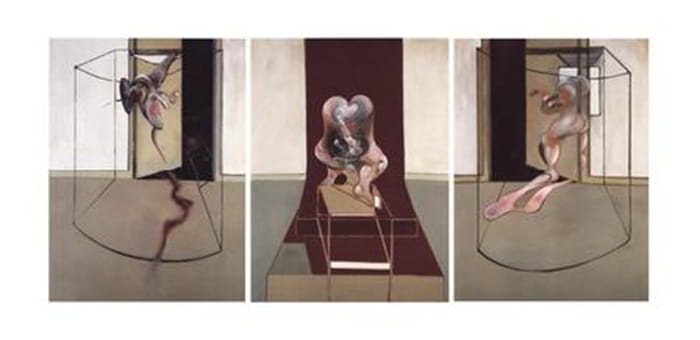
Triptych Inspired by the Oresteia of Aeschylus
Francis Bacon’s paintings delve into our innermost fears and desires, highlighting the transformative power of art in shaping perceptions and experiences. His work, influenced by his troubled upbringing and tumultuous relationships, often reveals the role of the subconscious. While not strictly Surrealist, Bacon’s use of distortion and disfigurement reflects the complex nature of the psyche, challenging traditional notions of beauty and representation. Pieces such as Triptych Inspired by the Oresteia of Aeschylus, embody his anxieties and the surreal quality of his art, doubly reflecting his engagement with classical literature and psychoanalytic theory.
The triptych format allows Bacon to depict a progression of fragmented, contorted figures, each confined within geometric frameworks that evoke a sense of entrapment and isolation. The stark, minimalist backgrounds draw attention to the grotesque, almost visceral quality of the figures, whose distorted forms convey intense psychological and physical anguish. The use of chiaroscuro and a muted color palette enhance the dramatic tension, creating a haunting atmosphere that mirrors the tragic themes of the Oresteia. This trilogy of Greek tragedies explores themes of justice, vengeance, and the transformation of personal vendetta into organized legal justice, delving into the cycle of bloodshed within the House of Atreus and culminating in the establishment of the court of the Areopagus, symbolizing the shift from primal retribution to civilized jurisprudence.
Bacon’s interpretation of the Oresteia through a psychoanalytic lens reveals the underlying currents of fear, guilt, and retribution that drive human behavior. The figures can be seen as manifestations of the subconscious, embodying repressed desires and traumas. By visually articulating these inner conflicts, Bacon invites viewers to confront their own psychological depths, making the artwork a powerful tool for self-reflection and understanding. This piece underscores the therapeutic potential of art to engage with and elucidate the complexities of the human psyche.
Oil on canvas - Astrup Fearnley Museum of Modern Art, Oslo

The Cremaster Cycle
Matthew Barney’s Cremaster Cycle (1994–2002) is a five-film project that fuses sculpture, performance, video, photography, costume, and myth into a single dreamlike universe. Barney often appears in the films, staging highly stylized rituals in surreal landscapes. The title refers to the cremaster muscle, which controls the rise and fall of the testicles, and Barney transforms this anatomical detail into a metaphor for sexual differentiation, power, and shifting states of identity.
Rather than follow a linear story, each film unfolds like a modern myth, mapping stages of bodily development, ambiguity, and cultural creation. Scenes feature elaborate costumes, strange animals, symbolic objects, and repeated physical actions, so that each sequence feels more like a living sculpture than a conventional narrative.
The layered imagery resonates strongly with psychoanalytic thought. Jungian theory highlights archetypes of birth, transformation, and sexual difference, while Freudian analysis focuses on the drives and anxieties that accompany reproduction and gender. Barney’s recurring motifs of bodies, reproduction, and metamorphosis invite viewers to confront unconscious material, echoing Freud’s ideas of repression and sublimation. His exploration of sexual ambiguity and bodily boundaries also reflects psychoanalysis’s concern with how identity is formed around gender, whether through Freud’s Oedipal complex or Lacan’s theories of the mirror stage.
The films operate like a collective dream. Their disorienting juxtapositions and absence of clear narrative push the audience into a mode of free association, projection, and interpretation, which are the very psychological processes that psychoanalysis seeks to uncover. Mirrors, masks, and costumes blur distinctions between subject and object, self and other, inside and outside, recalling Lacan’s insight that identity is shaped by recognition and by the gaze of others. The Cremaster Cycle thus becomes a symbolic journey into the creation of selfhood, using the body’s most primal functions as metaphors for transformation and the unconscious forces that shape human experience.
Beginnings of Psychoanalysis and Art
Pre-Freudian Figures
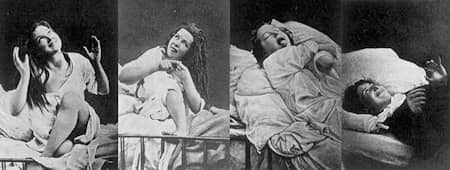
Before Sigmund Freud formalized the concept of the unconscious, a rich undercurrent of thinkers and artists was already questioning the supremacy of reason. Early-19th-century Romantic writers and Symbolist poets explored dreams, intuition, and the irrational as gateways to hidden truths, while philosophers such as Arthur Schopenhauer and Friedrich Nietzsche argued that human behavior is driven less by logic than by instinct and will. Their fascination with shadowy inner forces laid the groundwork for later psychological theories, creating a cultural climate in which the unconscious could emerge as a serious topic of study.
The foundation of psychoanalysis lies in the concept of the unconscious. The theories of Sigmund Freud have significantly shaped our modern understanding of the unconscious but in the late 19th century, this concept was much less defined. Around 1900, perspectives on the unconscious shifted dramatically as psychologists, doctors, artists, and writers began to challenge the positivist belief in the dominance of reason and willpower in mental life. Early psychological and neurological research from 1850 to 1920, particularly on the topic of hysteria—a predominantly female “disorder” marked by uncontrollable or exaggerated emotions—profoundly influenced French literature on dreams and the fantastical, especially in the works of Gustave Flaubert, Guy de Maupassant, and Marcel Proust.
Many of Flaubert’s works delve into the theme of duality, including multiple personalities, hysterical duality, and the concept of second selves. His own epileptic attacks and visionary experiences are examined as central themes in his fiction, suggesting that these episodes influenced his writing, creating a style that is open to external phenomena.
Maupassant’s work, notably his 1887 short horror story Le Horla, reflects a keen interest in clairvoyance and psychic powers. Maupassant was fascinated by hypnotic and extrasensory abilities, particularly those of itinerant magnétiseurs, practitioners in the 19th century who claimed to have the ability to heal and influence others through mesmerism and hypnosis techniques. In his portrayal, the unconscious emerges as a malevolent force, a brain parasite, and a symbol of psychic strangeness and undecidability.
Proust’s work underscores the transformation of unconscious impulses into creative expressions, highlighting the limitations of reason and logic in capturing the essence of the unconscious. He considered the distinction between voluntary and involuntary actions crucial, viewing the unconscious as a wellspring of profound, personal creativity. Memory, the involuntary, and the unconscious are central to his aesthetics. Proust’s masterpiece, À la recherche du temps perdu (In Search of Lost Time) (1913), was described by himself as “a series of novels of the unconscious.”
Freud’s Maternal and Sexual Symbolism
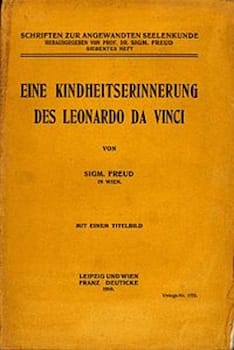
Sigmund Freud, the father of psychoanalysis, significantly impacted our understanding of art through his theory of the unconscious, sublimation, and the interpretation of symbols. Freud believed that much of human behavior is driven by unconscious desires, fears, and memories, often repressed to avoid psychological turmoil. He saw art as a form of sublimation, where these repressed impulses are transformed into culturally valuable creative expressions, allowing artists to channel their internal conflicts into their work, thereby resolving inner tensions. This concept extended to his analysis of dreams, where he argued that both dreams and artworks reveal hidden meanings and insights into the unconscious mind, providing a rich field for psychoanalytic interpretation.
Freud’s analysis of Leonardo da Vinci is one of the most notable applications of his theories to art. In his essay Leonardo da Vinci, A Memory of His Childhood (1910), Freud suggests that Leonardo’s artistic genius was a sublimation of repressed sexual desires. In his analysis of Leonardo’s notebooks, he was particularly captivated by a specific passage which described an early memory in which a vulture came to Leonardo in his cradle, opened his mouth with its tail, and repeatedly struck him with it inside his lips. This passage was interpreted by Freud as a symbolic expression of Leonardo’s unconscious fantasies, which he believed had a significant influence on Leonardo’s artistic creativity.
Freud explains Leonardo’s association of the vulture with his mother as rooted in his illegitimate birth and lack of a father figure. His analysis of Leonardo’s art suggests that the iconic smile seen in his works, like the Mona Lisa and Saint Anne, is a reanimated memory of his mother’s tenderness. Oskar Pfister, an analyst and disciple of Freud, identified a vulture’s form in Leonardo’s painting of Mary at the Louvre, which Freud accepted as validation of his theory linking Leonardo’s childhood memories to his art.
Critics, however, argue that Freud’s psychoanalytic interpretations are highly speculative and may impose modern psychological concepts onto historical figures without sufficient empirical support. For example, Meyer Schapiro has pointed out that Freud’s analysis can sometimes be reductive, focusing too narrowly on psychosexual development while neglecting other aspects of Leonardo’s life and work. Art historian Eric Maclagan further revealed a mistranslation in Freud’s analysis, where a kite (Italian nibbio) was mistaken for a vulture. Despite these criticisms, Freud’s work remains influential, providing a unique lens through which to explore the intersection of psychology and art.
The Dada Bridge
Although not direct disciples of Freud, Dadaists would serve as a foundational conduit between early modern psychology and later avant-garde movements, proving that art could channel the unpredictable energies of the unconscious as both critique and creation.
Dada erupted during World War I as an art of protest and absurdity. Rejecting logic and traditional aesthetics, Dadaists like Hugo Ball, Tristan Tzara, and Hannah Höch used chance operations, nonsensical poetry, and cut-and-paste collages to expose the irrational forces driving a supposedly rational world. Their embrace of randomness and free association paralleled Freud’s explorations of the unconscious and directly paved the way for Surrealist automatism.
Surrealism and the Unconscious
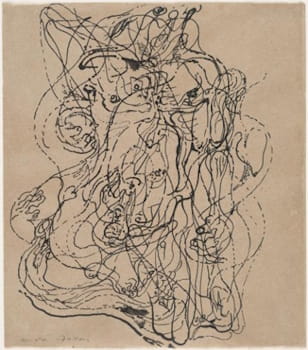
Influenced by Freud’s concept of the unconscious, Surrealism emerged after World War I as a revolutionary movement. André Breton, the movement’s leading figure, believed that artists should harness the unconscious to forge a new world order. Breton’s background in medicine and his wartime experience in a mental hospital profoundly shaped the direction of Surrealism. The early Surrealists’ understanding of human psychology was informed by French psychologists Jean Charcot and Pierre Janet, particularly their studies on hypnosis and psychological automatism—processes such as dreaming that operate outside of conscious control. Max Ernst further enriched the movement by introducing Sigmund Freud’s theories on the unconscious, which became a cornerstone of Surrealist thought. As Freud’s writings were translated into French, the Surrealists’ grasp and application of his ideas grew increasingly sophisticated and complex.
Despite Breton’s admiration for Freud, their meeting in 1921 was disappointing. Freud showed little interest in Breton’s ideas and declined to collaborate on Breton’s book Trajectoire du rêve (Dream trajectory, published in 1938). Freud remarked: “A mere collection of dreams without the dreamer’s associations, without knowledge of the circumstances in which they occurred, tells me nothing and I can hardly image what it could tell anyone ... I’m at such a distant position from art.”
During the 1920s and 1930s, Breton assembled a diverse group of poets, painters, and filmmakers, who came to be known as the Surrealists, to challenge traditional morals and rationality. Artists such as Salvador Dalí and Max Ernst employed dream analysis to explore hidden desires and fears, integrating Freudian concepts into their work. Man Ray and Hans Bellmer delved into themes of longing and eroticism, reflecting Freud’s theories on repressed urges. René Magritte frequently incorporated the concept of the uncanny—something simultaneously familiar and strange, as described by Freud—to challenge perceptions of reality. Meanwhile, Joan Miró and André Masson used psychic automatism, allowing their unconscious minds to guide their creative processes.
Surrealism celebrated the liberation of unconscious drives, advocating for a free, emancipated human being. However, many surrealists were heterosexual men prioritizing their own desires, often treating women primarily as objects rather than autonomous individuals. In her essay, critic Susanne Christensen discusses how female surrealists were often muses and mediums, embodying the enigmatic and unconscious aspects revered by male surrealists. Surrealism also fetishized so-called primitive cultures, viewing them as more natural and closer to the unconscious. Breton notably praised Mexico as the most surrealist country in the world, which was critiqued as a Euro-centric and colonial outlook that perceives the “oriental” as exotic and otherworldly, as discussed by Edward Said in his book Orientalism (1978).
Although Surrealism grew largely out of European circles, psychoanalytic ideas were also being reimagined far beyond Paris. Artists in Japan’s Gutai group, Indian modernists, and Latin American surrealists drew on Freud and Jung while blending them with local mythologies, spiritual practices, and colonial histories. In the Caribbean and Mexico, for example, dream imagery merged with indigenous symbols and political struggles, challenging Western claims to own the language of the unconscious. These cross-cultural adaptations reveal that the drive to explore hidden psychic forces was never solely a European pursuit, but a global conversation reshaping how artists represented the inner life.
Jung and the Collective Unconscious
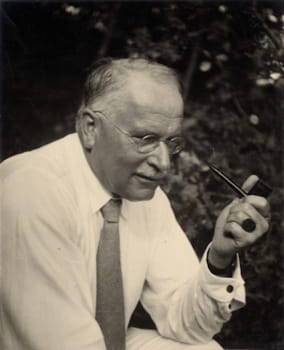
Carl Jung’s theories on psychoanalysis diverged significantly from Freud’s, emphasizing the collective unconscious and archetypes. Jung believed that beneath our personal unconscious lies a deeper layer shared by all humans, filled with universal symbols and memories. This collective unconscious plays a crucial role in shaping human experiences and behaviors, influencing not just personal psychology but cultural and artistic expression.
Jung’s exploration of archetypes—recurring motifs such as the hero, the mother, and the trickster—has had a profound impact on art. Artists, consciously or unconsciously, tap into these archetypal images, bringing them to life in their work. Jung viewed art as a powerful medium for expressing the unconscious mind. His ideas encouraged artists to delve into their inner worlds, embrace symbolic imagery, and explore themes of transformation and integration.
In The Red Book (1914-1930), which was considered to be the foundation of Jung’s theoretical contribution, he embarks on a profound inner journey, documenting his encounters with the unconscious through vivid imagery and symbolic narratives. This work is a testament to Jung’s exploration of his psyche, revealing archetypal visions that he believed were central to understanding the human condition. The richly illustrated pages of The Red Book serve as a conduit for artistic inspiration, offering a deep well of material that artists can draw upon.
Abstract artists Jackson Pollock and Mark Rothko were notably impacted by Jung’s ideas on the unconscious and archetypes. Pollock’s action painting style and Rothko’s color field paintings reflect Jungian themes of exploring deep, inner psychological landscapes. Welsh artist Ceri Richards also found inspiration in Jung’s concepts. In a letter to Richards, Jung himself mentioned understanding his artwork as a confession of the secret of their time. By engaging with Jung’s symbols and themes, these artists cultivate a deeper connection to the universal human experience while enhancing their understanding of the self.
Lacan and the Mirror Stage
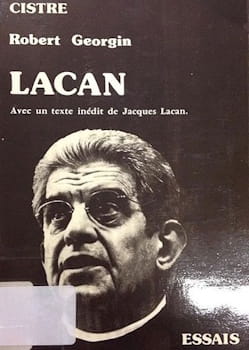
Jacques Lacan, a French psychoanalyst and psychiatrist, made significant contributions to psychoanalysis with his theories of the mirror stage, the concept of the Real, the Imaginary, and the Symbolic, and his reinterpretation of Freud’s work through structural linguistics. Lacan’s mirror stage theory suggests that the formation of the “I” is established through a child’s identification with its own reflection, a critical phase in developing the ego and self-identity.
Lacan’s triadic structure of the Real, Imaginary, and Symbolic offers a comprehensive framework for understanding the complexities of human subjectivity and psychic reality within the workings of the mind. The Real represents what can’t be fully put into words, the Imaginary pertains to images and self-illusion, and the Symbolic is the realm of language and social rules that shape our lives.
Lacan was actively involved in the Surrealist movement and acquainted with prominent artists like Dalí, Marcel Duchamp, and Pablo Picasso. Lacan had consulted Dalí to better understand his theory of paranoia, or the “paranoiac-critical method,” which posits that irrational thoughts and delusions can be harnessed as a source of creativity. And Picasso enlisted Lacan to treat his mistress, French surrealist photographer and painter Dora Maar, after their separation in 1944.
Lacan’s engagement with the art world extended beyond his personal relationships with these artists. His ideas about the symbolic order and the role of language have been particularly influential in post-structuralist and deconstructive art criticism. For example, Jackson Pollock’s abstract expressionist paintings, marked by chaotic and spontaneous drips and splatters, can be interpreted through a Lacanian lens as an exploration of the unconscious and the breakdown of traditional symbolic structures. His work embodies the fluidity and instability of the symbolic order, urging viewers to face raw, unmediated expressions of inner desires and emotions. This approach also echoes Lacan’s belief that language is an unstable medium that shapes both the self and reality.
Psychoanalysis and Abstract Expressionism
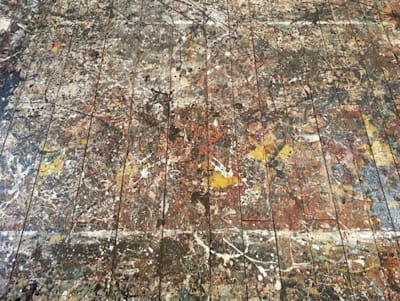
Abstract Expressionism, an art movement that originated in the mid-20th century in the United States, is characterized by abstract forms, gestural brushstrokes, and expressive color palettes. A key aspect of the movement is its focus on the psychological aspects of the creative process. Many abstract expressionist artists were influenced by the psychoanalytic theories of Freud and Jung, aiming to explore the unconscious mind through their art. The spontaneous and intuitive nature of their techniques parallels the process of free association in psychoanalysis, where patients express their thoughts and feelings without censorship.
Freud’s ideas on the unconscious, repression, and the power of dreams influenced many Abstract Expressionist artists. These artists sought to tap into their unconscious emotions as a source of inspiration, often using techniques like automatic drawing and painting to bypass conscious control and access a more primal mode of expression. Jung’s theories on the collective unconscious and the significance of archetypes also resonated with Abstract Expressionists. They were interested in exploring the universal aspects of human experience and the symbolic language of the psyche. Jung’s concept of individuation, which involves integrating one’s unconscious and conscious aspects to achieve psychological wholeness, provided a framework for understanding art’s transformative power and its potential for personal growth and self-discovery.
Abstract Expressionism’s emphasis on individual expression and the subjective interpretation of abstract forms encouraged viewers to engage with the artwork on a deeply personal level, often eliciting strong emotional responses and fostering empathy and shared experience. This aspect of Abstract Expressionism contributed to the development of art therapy as a means of promoting psychological well-being and emotional healing.
Psychoanalytic Film Theory
Psychoanalytic film theory offers insights into a fundamental question in film studies: why do people watch and enjoy films? To answer this, key psychoanalytic concepts such as desire, fantasy, enjoyment, demand, the real, and the imaginary are explored. Psychoanalytic film theory emerged in two distinct waves. The first wave, in the late 1960s and early 1970s, focused on critiquing cinema’s role in disseminating ideology through the cinematic apparatus. The second wave, starting in the late 1980s and continuing today, also rooted in Lacanian thought, shifted focus to how cinema relates to trauma and disrupts ideology.
One of the significant ironies in film theory history lies in the term “Screen theory” itself. Screen theory focuses on the process of imaginary identification, where viewers see films as complete illusions that mask their production. Laura Mulvey’s essay “Visual Pleasure and Narrative Cinema” is particularly influential, which uses Lacan’s “Mirror Stage” as a foundation to turn psychoanalysis towards feminist critique, focusing on how popular cinema creates ideological effects by immersing spectators in a bath of images that obscure the production process. However, screen theory often misinterprets Lacan by overemphasizing the mirror stage, leading to a focus on the imaginary at the expense of the real, which diverges from Lacan’s broader psychoanalytic framework.
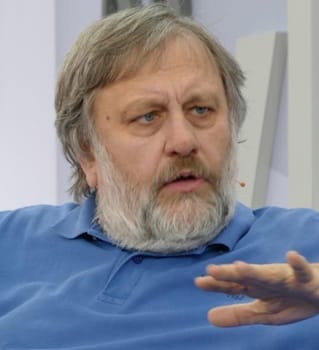
Slavoj Žižek is a pivotal figure in contemporary psychoanalytic film theory, who subtly reorients the field towards a Lacanian understanding of the real. Žižek’s interpretation of Lacan shifts the perception of Lacan from a critic of subjectivity to a philosopher of the subject. He shows that Lacan wasn’t just tearing apart the idea of the self but offering a way to understand how our sense of who we are actually takes shape through language, hidden desires, and the strange realities beneath everyday life.
Žižek’s film analyses often focus on pivotal scenes that reveal the viewer’s desires rather than the entire film. For example, in his discussion of Hitchcock’s Psycho (1960), he emphasizes the scene where Norman Bates hides Marion’s car in the swamp, highlighting how this moment exposes the spectator’s desire and complicity. This approach underscores the potential of cinema to reveal ideological structures and the unconscious desires they mask.
Concepts and Styles
The Unconscious
The concept of the unconscious, as introduced by Sigmund Freud, is a foundational element in the realm of psychoanalysis and art. Freud’s early work differentiates between three registers: consciousness, the preconscious, and the unconscious. Consciousness includes only what is currently in one’s mind, making it limited in scope. The preconscious encompasses all knowledge that can be easily brought into consciousness. The unconscious functions differently, causing disturbances in psychic equilibrium and influencing behavior and thought in ways that are not directly accessible through conscious awareness.
Freud posited that the unconscious mind holds repressed experiences and primal impulses that are often too disturbing or socially unacceptable to be acknowledged consciously. These hidden elements manifest in dreams, slips of the tongue, and creative expression, offering a window into the deeper, often concealed aspects of the human psyche.
In the realm of art, the unconscious has been a fertile ground for exploration, particularly within Surrealism. Through techniques such as automatic writing and drawing, dream analysis, and free association, Surrealists aimed to reveal the hidden desires and fears that reside in the unconscious. Their artworks often feature dream-like imagery, bizarre juxtapositions, and fantastical scenes, all designed to disrupt the viewer’s conscious perception and evoke a deeper, instinctual response. This method aligns with Freud’s belief that art can serve as a means of accessing and expressing the unconscious.
Dream Analysis
Dream analysis, systematically introduced by Freud, seeks to uncover the unconscious thoughts and desires manifesting in dreams. Freud posited that dreams are a form of wish fulfillment, revealing repressed desires and unresolved conflicts through symbolic imagery and narrative, famously stating that dreams are the “royal road to a knowledge of the unconscious activities of the mind.” Dream analysis inspired artists to explore and express the unconscious mind’s mysterious and hidden terrain. This impact is evident in the Surrealist movement, where dream interpretation was used to create irrational imagery, as often seen in the works of René Magritte and Salvador Dalí.
Carl Jung’s theory of dream analysis offers a distinct perspective, viewing dreams not merely as repressed desires or conflicts but as messages that reflect the dreamer’s personal and collective unconscious. Jung suggests that dreams often contain universal symbols tapping into shared human experiences and knowledge, believing that interpreting these symbols and understanding their significance could lead to greater self-awareness and psychological growth, thus enriching the individual’s journey toward individuation and holistic understanding.
James Hillman, a leading post-Jungian thinker, revolutionized psychoanalysis through his development of archetypal psychology, which emphasized the importance of imagination, myth, and metaphor in understanding the human psyche. Hillman’s approach focused on the phenomenological aspects of dreams and images, viewing them as direct engagements with the unconscious rather than subjects for symbolic interpretation. His concept of “soul-making” highlighted the transformative potential of engaging with the depths of the human soul through artistic expression.
Psychic Automatism
Psychic automatism is a foundational concept in Surrealist art, referring to the process by which artists tap into their unconscious minds to produce spontaneous and unmediated creative works. This technique, championed by André Breton in his 1924 “Manifesto of Surrealism,” is designed to bypass the rational mind and allow the free flow of thoughts and images from the unconscious. Breton defined it as “pure psychic automatism,” a method through which one expresses the true functioning of thought, free from any control exercised by reason and exempt from any aesthetic or moral concern.
In practice, psychic automatism often involves methods such as automatic writing, drawing, or painting, where the artist records thoughts and images as they occur without any premeditation or structured planning. This process reveals the inner workings of the mind and uncovers hidden desires, fears, and memories that are typically repressed by the conscious mind. The aim is to create art that is authentic and raw, capturing the spontaneous and chaotic nature of the unconscious. This method was notably employed by artists like André Masson, Max Ernst, and Joan Miró, who used automatism to explore dream-like states and bizarre, fantastical imagery.
The importance of psychic automatism extends beyond visual art, influencing literature and various other creative fields. It represents a radical departure from traditional artistic techniques that rely on careful planning and conscious intent. By embracing the unpredictable and often irrational impulses of the unconscious, Surrealist artists sought to challenge conventional perceptions of reality and expand the boundaries of artistic expression. This approach also left a lasting impact on modern and contemporary art, encouraging artists to explore the depths of the human psyche and embrace the power of spontaneity and intuition in their creative processes.
Fetishism
The term fetishism was originally taken from anthropological texts where “fetish” (also spelled “fetich”) described an object believed to hold magical or spiritual powers. Its psychiatric use is introduced by the works of Sigmund Freud, defined as the displacement of sexual arousal onto an inanimate object or a specific body part. Freud posited that this phenomenon stems from childhood experiences and anxieties, particularly the castration complex, where the young male child perceives the female body as lacking a phallus and subsequently displaces his anxiety onto a substitute object. This substitution allows the individual to manage deep-seated fears and desires, transforming the object into a symbol imbued with erotic significance.
In the realm of art, fetishism emerges as a broad commentary on human psychology and aesthetics. Artists often explore fetishistic themes to challenge societal norms and reveal hidden layers of meaning within the human experience. Surrealists, for example, used fetishistic imagery to uncover the irrational and the fantastical. Dalí’s Lobster Telephone (1938) and Hans Bellmer’s The Doll (c.1936) are such examples where ordinary objects are transformed into symbols of desire and discomfort, prompting viewers to confront their subconscious fears and fantasies.
Contemporary artists continue to engage with fetishism to critique consumer culture and the commodification of the human body. In this context, fetishistic art becomes a powerful vehicle for examining the ways in which objects are imbued with value and meaning. By transforming everyday items into objects of desire, artists like Jeff Koons and Damien Hirst provoke critical discourse on identity, power, and the pervasive influence of visual culture.
The Mirror Stage
The introduction of “The Mirror Stage” by Jacques Lacan is a pivotal moment in psychoanalytic theory. Occurring between six and eighteen months of age, this stage marks the child’s realization of a self-image, distinct from the fragmented experiences of their early life. This recognition is both empowering and alienating: the child perceives a unified, idealized self in the mirror, which contrasts sharply with their own sense of bodily disunity. This moment initiates the formation of the ego and the ongoing pursuit of this ideal self, a pursuit that shapes the individual’s interactions and relationships throughout life.
The Mirror Stage has greatly influenced both the creation and interpretation of visual works. Artists often explore themes of self-perception, identity, and fragmentation, mirroring the psychological processes described by Lacan. For instance, the works of Francis Bacon depict the human form in a state of flux and distortion, reflecting the tension between the idealized self-image and the chaotic reality of human existence.
Moreover, the mirror often symbolizes the interplay between self and other, subject and object, and reality and illusion in art. The installations of Anish Kapoor, for example, frequently use reflective surfaces to create disorienting experiences that force viewers to confront their own perceptions and the nature of reality. By manipulating reflections and spaces, Kapoor’s art evokes the Lacanian idea of the self as a construct, constantly shaped and reshaped by external forces and internal desires.
The Gaze
In Lacan’s psychoanalysis theory, “the gaze” is not merely about seeing but about how individuals perceive themselves as seen by others, which plays a crucial role in the formation of identity and the experience of subjectivity. He explains, “What determines me, at the most profound level, in the visible, is the gaze that is outside. It is through the gaze that I enter light, and it is from the gaze that I receive its effects.” This perspective shifts the focus from the act of seeing to the psychological and existential effects of being seen, emphasizing the power relations embedded in visual encounters.
The concept of the gaze has been explored and exemplified in numerous artworks. For instance, Édouard Manet’s Olympia (1863) famously confronts the viewer with the direct gaze of a reclining nude woman. Unlike traditional depictions of passive and demure female nudes, Olympia’s unflinching stare challenges the viewer, reversing the typical power dynamics and making the observer acutely aware of their role in the act of looking. This painting highlights how the gaze can be a tool of empowerment or subversion, forcing the viewer to confront their own gaze and the underlying social and cultural constructs it reflects.
In Michael Powell’s film Peeping Tom (1960), the main character Mark Lewis embodies Lacan’s concept of “the gaze” with unsettling clarity. Mark plays dual roles as both observer and perpetrator through his camera. His obsessive filming distorts his perception of the victims’ reality and identity, reducing them to mere objects of desire and fantasies. Mark’s voyeuristic tendencies, exacerbated by his traumatic upbringing, also reflect a deep need to assert dominance and control through his gaze, which underscores Lacan’s concept of the gaze as a transformative force that shapes both the subjectivity of the observer and the perceived reality of the observed.
Later Developments - After Psychoanalysis and Art
After the breakthroughs of Abstract Expressionism, psychoanalytic ideas continued to spark new forms of experimentation. Performance and body artists such as Marina Abramović and Ana Mendieta turned their own bodies into sites of ritual, trauma, and desire, echoing Freud’s focus on repression and release.
Building on these bodily experiments, Postmodern art of the mid-20th century began to integrate psychoanalytic theories by deconstructing traditional narratives and embracing multiplicity and contradiction. Artists such as Cindy Sherman and Barbara Kruger explore themes of identity, gender, and power, highlighting the instability and constructed nature of the self. Sherman’s self-portraits, for instance, question the authenticity of identity by presenting herself in various guises, each critiquing societal expectations and reflecting the fragmented self. This aligns with Lacanian psychoanalysis, where the self is seen as a series of images and symbols rather than a unified whole.
These artistic shifts mirrored a wider intellectual movement where psychoanalysis has shaped postmodern thinking far beyond art, influencing culture and philosophy by questioning big, all-encompassing explanations of truth. Thinkers like Jean-François Lyotard and Jacques Derrida use ideas from psychoanalysis to show that our sense of reality is built through language, power, and veiled desires. From this view, there isn’t just one final truth because meaning depends on context and perspective, and many different, even conflicting, truths can exist at the same time.
In recent decades, psychoanalytic ideas have continued to evolve, crossing into new disciplines and media such as semiotics and cultural studies, providing a nuanced analysis of how art reflects and shapes human experience. This interdisciplinary approach allows art to serve as a medium for expressing and processing complex psychological states. Contemporary artists like Holly Stevenson and Chantal Powell incorporate psychoanalytic theories into their work. Stevenson uses Freud’s ideas of substitution in her symbolic sculptures, reflecting personal and familial trauma through reinterpreted objects. Powell, inspired by Jungian concepts, explores the symbolic language of the unconscious with motifs like ladders and boats to represent psychological journeys. Their integration of psychoanalytic thought into art demonstrates the enduring relevance of exploring the human psyche through artistic expression.
Contemporary creators working in film, video, and digital installations now use interactivity and virtual reality to probe unconscious fears and fantasies, showing that the dialogue between art and psychoanalysis remains alive and evolving.
Beyond galleries and theory, psychoanalysis now permeates everyday culture from advertising and fashion photography to film, music videos, and social media aesthetics. The language of desire, symbolism, and unconscious drives that once fueled avant-garde art has become part of how popular culture shapes identity and pleasure, showing that the psychoanalytic imagination continues to inform both high art and mass media.
Useful Resources on Psychoanalysis and Art
- The Freudian BodyBy Leo Bersani
- Leonardo, Psychoanalysis, and Art History: A Critical Psychobiographical Approaches to Leonardo da VinciOur PickBy Bradley I. Collins and da Vinci Leonardo
- Art, Creativity, and Psychoanalysis: Perspectives from Analyst-ArtistsBy George Hagman
- Dancing with the Unconscious: The Art of Psychoanalysis and the Psychoanalysis of ArtBy Danielle Knafo
- Movies and the Mind: Theories of the Great Psychoanalysts Applied to FilmBy William Indick
- This Art of Psychoanalysis: Dreaming Undreamt Dreams and Interrupted Cries (The New Library of Psychoanalysis)By Thomas H Ogden
- The Spirit in Man, Art, & LiteratureBy C. G. Jung
- Jungian Art Therapy: Images, Dreams, and Analytical PsychologyBy Nora Swan-Foster
- Figures of the Pre-Freudian Unconscious from Flaubert to ProustBy Michael R. Finn
- The Theory of PsychoanalysisOur PickBy Carl Jung
- Jackson Pollock: Psychoanalytic DrawingsBy Claude Cernuschi