Ask The Art Story AI

Summary of Cory Arcangel
Cory Arcangel is a seminal American artist whose practice foregrounds the inventive manipulation of digital media, obsolete technologies, and internet culture as vehicles for interrogating obsolescence, technological failure, collective memory, and cultural nostalgia. Working across video games, software-based systems, artificial intelligence, and installation, Arcangel merges irony and humor with incisive critiques of consumer technology and the accelerated temporality of media innovation, while destabilizing conventional expectations of interactivity. Far from merely anticipating Post-Internet Art, his work was instrumental in articulating the movement's ethos, aesthetics, and critical disposition. Now based in Norway, Arcangel also directs Arcangel Surfware, a hybrid conceptual brand and gallery that extends his inquiry into the aesthetics, economies, and lived conditions of digital culture, while advancing his commitment to its democratization and preservation.
Accomplishments
- Situated at the intersection of play and rigor, Arcangel's work occupies a crucial position within the art-historical canon, forging a lineage from Duchamp's readymades through Sol LeWitt's conceptualism to Post-Internet strategies, and demonstrating how digital code and technological obsolescence can themselves become canonical artistic methodologies.
- Arcangel has evolved the avant-garde philosophy, which refers to work that is experimental, innovative, and ahead of its time, into the digital landscape for today's generation of art audiences which exist beyond gallery and museum walls, creating a dissolution of artistic boundaries and a democratization of visual culture for the internet age.
- By treating the digital world not as a novelty but as a cultural archive and through making the material and temporal layers of the internet visible and meaningful in art, Arcangel positioned the act of digital appropriation as an aesthetic and critical practice. A practice where elements like elevated source code and interface logic became conceptual and visual art, expanding the artist's toolkit.
- Through his commitment to educating the public on how his artworks are created, often composing detailed instructions for his appropriation, intervention, and modification of digital media, machines, computers, software and the internet, Arcangel dismantles barriers of accessibility in the complex arena of technology.
- By embracing glitch, repetition, and futility as central motifs, Arcangel spotlights the sense of melancholy, boredom, and detachment of an emotional landscape lived alongside machines. His work often reflects an absurdity that mirrors our relationship to screen culture.
The Life of Cory Arcangel
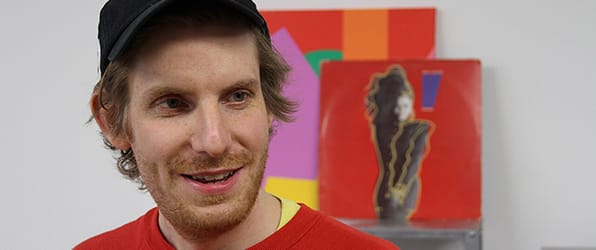
Renowned for his playful yet unconventional approach to digital media, Cory Arcangel has emerged as a leading contemporary artist whose work reflects the evolving history of technology and our interactions with it.
Important Art by Cory Arcangel

The 5kHz Low-NRG U-Haul Disk
In 1998, Cory Arcangel created The 5kHz Low-NRG U-Haul Disk an experimental music project encapsulated within a 1.44 MB floppy disk. This early work consists of an EP (an extended play piece of music longer than a single but shorter than a full album) composed entirely for and stored on this modest storage medium, designed for playback exclusively on Mac OS 9 systems.
By embedding a complete music work on a medium that would inevitably become obsolete, Arcangel invited reflection on how software and hardware obsolescence affects digital art. The piece challenges us to consider how creative content survives or vanishes as tech evolves.
It also reflects his early exploration into the intersections of digital art, music, and computer technology, themes that would become prominent to his later works. Although the term Post-Internet art would not be popularized until years later, The 5kHz Low-NRG U-Haul Disk was an early harbinger of its characteristics such as playing with distribution, access, and interface; subverting the trends of mass digital accessibility seen with streaming sites and the iTunes store; and turning limitation into a type of aesthetic resistance. The piece anticipated Post-Internet Art’s core concern of how art could behave in a digital-saturated world, even when using "dead" media.
1.44 Meg Floppy

Super Mario Clouds
In this video installation, Arcangel altered a Super Mario Bros. game cartridge for the Nintendo Entertainment System (NES), removing all elements except for the scrolling white clouds against a blue sky. With Mario, the landscape, and the game's soundtrack erased, what remains is a minimalist, almost meditative version of the iconic game. The work's quiet simplicity evokes a sense of nostalgia and melancholy, especially for those familiar with the original. However, when asked whether there is any sad component about this work, Arcangel replied that he finds it "pretty positive and hopeful...I've never really associated with being sad or anything."
Initially, Arcangel shared Super Mario Clouds online, making both the video and the code available on his website. Rather than seeking traditional gallery exhibitions, he embraced internet distribution, reflecting a shift toward digital accessibility in contemporary art. The project quickly gained attention, leading to its first physical installation at Team Gallery in New York in 2003, where the modified gaming console was included in the exhibit. A year later, it was featured in the Whitney Biennial which brought the work to a wider fine arts audience. In 2005, Arcangel expanded the project's influence by creating The Making of Super Mario Clouds, an instructional video and publication. By sharing the code in zine-style publications, he invited others to replicate and reinterpret his process, sparking discussions about open-source creativity and the intersection of art and technology.
Super Mario Clouds became a key work in early Post-Internet Art as one of the pieces that defined the term because it embodied a shift from object-based art to code-based art, from exclusivity of audience to accessibility by all, and from art as a finished product to art as an ongoing process.
Handmade hacked Super Mario Brothers cartridge and Nintendo NES video game system - Whitney Museum of American Art, New York

currentmood
Arcangel's currentmood his second solo exhibition at Lisson Gallery London, explores themes of obsession and obsolescence, reflecting the fleeting nature of internet culture and his own artistic interests. The exhibition functioned like a "listicle" image dump, forming a self-portrait of Arcangel's digital habits, which he often shares under the hashtag #currentmood.
Visuals are sourced from a wide array of media such as magazines, Photoshop's default effects, commercial photography, and low-resolution screen captures and included Ibiza flyers, Adidas tracksuits, a Lord and Taylor logo with a lake effect, a cell phone, car rental returns, the sixty-times-size reproduction of one line from a robot arm which the artist bought from Ebay, and reprints from earlier works.
These works, according to Arcangel, are meant to display that there exists "no hierarchy between image (in terms of) quality and intent...which is kind of how I see what I do in a way...it's like a survey that is not really a survey." Also, according to the artist, "the show is a kind of like everything at once that I've been working on the last five years except I decided to make everything the same size...it's like a buffet."
Beyond the gallery walls, currentmood extends into the digital realm through an online advertising campaign, with works appearing as promoted content across the internet. Arcangel has long embraced open-source culture. By exhibiting the same images both in a gallery setting and as internet clickbait, he highlights the dissolution of traditional artistic boundaries and the increasing democratization of visual culture.
Web-based generative artwork - Lisson Gallery, London

Photoshop CS: 84 by 50 inches, 300DPI, RGB, square pixels, default gradient "Blue, Red, Yellow," mousedown y=23400 x=7500, mouseup y=600 x=7500; tool "wand,"select y=23000 x=7320, tolerance=32, contiguous=off; default gradient "Blue, Red, Yellow"
This work exemplifies Arcangel's simple, experimental, and accessible approach to digital art creation. It is a large-scale C-print measuring eighty-four by fifty inches, created entirely within Adobe Photoshop CS. Arcangel documents the specific actions and settings used in the software, such as the application of the default "Blue, Red, Yellow" gradient and precise mouse coordinates, to construct the final image. By openly sharing the exact sequence of steps and parameters employed, he invites viewers to consider the role of the artist in an era where software can generate complex visuals. This transparency not only demystifies the creative process but also raises questions about originality and replication in digital art.
Photoshop CS: 84 by 50 inches also engages with the aesthetics of digital media. The use of default gradients and tools references the ubiquitous visual language of early twenty-first-century computer graphics. Arcangel's deliberate choice to utilize standard Photoshop features somehow indicates the tension between creativity and the constraints of software defaults. Smithsonian American Art Museum says of the Photoshop Gradient Demonstrations that "Cory Arcangel toys with the novelties of consumer technology and how fantastically they age...His demonstration folds easily accessible consumer technologies into the often-inaccessible nature of contemporary art, both of which progress toward an eventual clumsiness and obsolescence."
C-print - Lisson Gallery

Self Playing Nintendo 64 NBA Courtside 2
Self Playing Nintendo 64 NBA Courtside 2 is a large projection of a modified Nintendo 64 game in which Shaquille O'Neal repeatedly takes shots but never scores. A basement couch invites viewers to sink into the hypnotic rhythm of this endless loop, where Shaq's constant failure shifts between humor and discomfort. The screen alternates between two perspectives: a distant view, evoking a pop-culture version of the back view, as he stares at his unreachable goal, and a close-up of his expression before each shot - frozen somewhere between hope and resignation. What starts as an amusing cycle gradually becomes unsettling, its monotony fostering a growing sense of unease.
As art critic Katie Kitamura observes, Arcangel's Various Self Playing Bowling Games (2011) similarly thrives on its depictions of futility: "One of the pleasures of Various Self Playing Bowling Games lies in watching the increasingly realistic depictions of rage and frustration, as gutter ball after gutter ball is inexorably rolled. Players shake their heads, stamp their feet and occasionally throw themselves on the ground. While there's something of a philosophical bent to the work (the dystopian lack of agency, the double-edged ring to 'self playing'), it's worn lightly." Arcangel's works invite us to contemplate failure not as an endpoint, but as an infinite loop - one that plays out with both comedic detachment and existential weight.
Hacked Nintendo 64 game console, NBA Courtside 2 game cartridge and video - Herning Museum of Contemporary Art, Denmark

/roʊˈdeɪoʊ/ Let's Play: HOLLYWOOD 2021-06-09T20:22:00+02:00 10870
This complex piece is powered by /roʊˈdeɪoʊ/ (pronounced like "Rodeo" in Rodeo Drive), a unique artificial intelligence system designed to play and learn from video games. For its first project, Let's Play: HOLLYWOOD, the system was trained to navigate Kim Kardashian: Hollywood, a mobile game where players create a character and work their way up from obscurity to A-list celebrity status by gaining fans, networking, and completing gigs. The game follows a freemium model, encouraging in-app purchases for faster progress, while offering a glamorous, gamified take on Hollywood's social and entertainment industry. It features a custom soundtrack by American composer and music producer Daniel Lopatin, also known as Oneohtrix Point Never, which adds an immersive layer to the experience.
Developed between 2017 and 2021 in Arcangel's studios in Brooklyn and Stavanger, /roʊˈdeɪoʊ/ is a highly advanced gaming system that can analyze, learn, and make decisions while playing. It uses artificial intelligence to recognize patterns in the game, make choices, and improve its strategy over time. The system is built with powerful hardware and software that allow it to "see" what's happening on the screen and respond in real time, much like a human player. By automating a process that typically requires human choices and aspirations, the work raises questions about authorship, agency, and whether success in digital spaces and real spaces is a result of genuine creativity or simply an optimization of pre-set pathways. The AI's ability to navigate the game exposes the structured, almost mechanical nature of mobile gaming, where progression is dictated by programmed incentives rather than personal decisions.
This single-channel work is part of Arcangel's long-standing exploration of video games and digital technologies showcasing his ongoing and evolutionary creative approach to each. With /roʊˈdeɪoʊ/, Arcangel takes his ideas further, creating a project that explores the relationship between humans and machines. The work invites viewers to reflect on themes of automation, identity, and our evolving connection to technology, offering a playful and somehow inspiring experience.
Single-channel video - Image courtesy of the Lisson Gallery

Let's Play Majerus G3
In 2024, Cory Arcangel introduced Let's Play Majerus G3, a project that delves into the digital practices of Michel Majerus, a Luxembourgian artist known for his dynamic fusion of painting with digital aesthetic, pop culture, and contemporary media. His work was ahead of its time in how it embraced the visual language of computer graphics, video games, corporate branding, and internet culture.
At the heart of this initiative is the restoration of Majerus' Macintosh PowerBook G3, a laptop he used extensively until his passing in 2002. Working in collaboration with Rhizome, the international hub for new media art since 1996 and an organization dedicated to digital preservation, Arcangel successfully revived the device, revealing a snapshot of Majerus' creative process and personal digital workspace. This effort underscores the importance of archiving digital culture, echoing Arcangel's own reflections: "As culture itself becomes increasingly digitized, more and more of it will end up in drawers like this - discarded, forgotten, and inoperable."
The project takes multiple forms, including an exhibition at the Michel Majerus Estate in Berlin, featuring works by both artists, and a YouTube video series where Arcangel provides live commentary as he navigates the restored laptop. Through these platforms, audiences gain direct access to Majerus' digital world, experiencing his working methods through an emulation software. By merging digital restoration with public engagement, Let's Play Majerus G3 not only preserves Majerus' technological footprint but also raises broader questions about the fragility of digital art and the evolving relationship between creativity and technology.
Youtube® video series
Biography of Cory Arcangel
Childhood
Cory Arcangel was born in Buffalo, New York. Although much of his future work would involve video games, Arcangel confessed that he "wasn't a big video game nut" because he lacked the patience for them. However, he admitted to being really into SimCity - until, as he put it, "it got ruined when I got the cheap version of it and had everything, and it became no fun anymore." Reflecting on his childhood, Arcangel once said, "I'm not sure what I was good at as a kid. I was good at playing with LEGOs." He received his early schooling at the private, college preparatory Nichols School, enjoying his role as a star lacrosse goalie. He was also very interested in guitar and was practicing for hours daily by the time he turned seventeen.
Arcangel's early life was influenced by his hometown's vibrant modern art scene, that during the 1970s and 80s was fueled by a convergence of avant-garde institutions and artists. For example, Hallwalls Contemporary Arts Center, founded in 1974 by artists including Cindy Sherman and Robert Longo, continued to serve as an incubator for cutting-edge and interdisciplinary art. Meanwhile, the Burchfield Penney Art Center, which featured internationally recognized artists such as Xu Bing and Ann Hamilton, played a crucial role in celebrating regional artists. Experimental video artists such as Nam June Paik were frequently shown at the Squeaky Wheel Buffalo Media Arts Center. Additionally, the punk scene also contributed to the city's creative energy, with figures like Greg Sterlace pioneering new forms of performance and media arts.
Early Training and Work
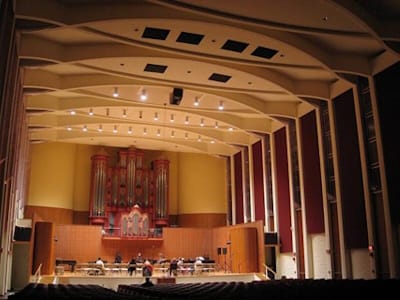
Arcangel began his artistic journey as a classically-trained guitarist at Ohio's Oberlin Conservatory of Music, where he developed a foundation in harmony and composition. He likens playing the guitar to multidimensional thinking, similar to chess, as it requires strategic decision-making when choosing how to play the same note in different ways. His classical training also instilled in him an awareness of time and staging - fundamental principles in the performance arts. Reflecting on this, he noted: "Music is sounds arranged through time... And since my education was specifically classical, I became very familiar with the idea of the 'stage' and how narrative time plays out on a stage. In a way, I could make an argument that most of my work is really about time and framing."
While studying at Oberlin, Arcangel shifted his focus to music technology, earning his Bachelor of Music degree in 2000. He credits an early composition class teacher, Pauline Oliveros, for his "fascination with finding artistic inspiration in unlikely machines." During this time, he met British American artist Paul B. Davis and, along with sound engineer Joseph Bonn and programmer/DJ Joseph Beuckman, founded the BEIGE Programming Ensemble. This collective focused on creating music and art using obsolete computers and gaming systems. However, BEIGE was never a traditional musical group, and it rarely "played" music in a conventional sense, whether on tour or otherwise. As Arcangel recalled in a recent conversation, "It was barely a band, I always thought of it more like a crew - like a graffiti crew or a drum 'n bass crew." He described their collaborative process as fluid and decentralized, noting, "It was even more disparate, which is more in line I think with how one would operate over a computer... more electronic or something, where we were never all in the same place at the same time."
Despite his background in music, Arcangel shifted his focus to digital art, particularly engaging with outdated video games. His engagement with video games was not driven by a personal interest in gaming but rather by his fascination with digital culture and technology. As both a programmer and an artist, he viewed video games as a medium for creative manipulation and artistic intervention. Gaming scholar Charles Bernstein states that "videogames are the purest manifestation of computer consciousness." Arcangel recognized that video games were more than just entertainment - they were cultural artifacts that shaped the way people engaged with technology.
Arcangel's early works often involved hacking and modifying digital systems to create new artistic interpretations. One of his most iconic pieces, Super Mario Clouds (2002), exemplifies this approach - he altered a Super Mario Bros. cartridge by removing all gameplay elements, leaving only the drifting pixelated clouds against a blue sky. This modification reimagined the familiar game as a minimalist meditation on digital landscapes and nostalgia. In another work, I Shot Andy Warhol (2002), Arcangel modified the Nintendo Entertainment System (NES) game Hogan's Alley, replacing the original characters with cultural figures such as Andy Warhol, the Pope, and rapper Flavor Flav. This playful alteration turns an interactive shooting game into a commentary on celebrity culture and media representation.

Through such projects, Arcangel explored how Digital Art could engage with pop culture and critical discourse while also helping form the foundation for Post-Internet Art. The movement, which emerged in the late 2000s, refers to contemporary art made after the internet became a ubiquitous part of life, exploring it, and its adjacent technologies' deep immersion into culture, society, and aesthetics.
Arcangel's groundbreaking projects piqued the interest of many progressive artists working at the crossroads of music and technology. In 2003, he met musician, video artist, and experimental filmmaker Tony Conrad backstage at the Destijl/Freedom from Festival of Music in Minneapolis, cementing a mutually appreciative long-standing friendship.
Mature Period
At the Art and Technology Lecture held at Columbia University in 2004, Arcangel discussed how he first became interested in using computers as an artistic medium because he wanted to explore and push the boundaries of what people typically think technology can or should do. His interest wasn't just in using technology, but in subverting or questioning its limits, for example, by changing code in a preexisting piece of patented software to affect its visual aesthetics or capabilities. In an interview, Arcangel denied his work having any political agenda, and instead described his motivation as an effort to dismantle technological barriers. "Basically, the core reason I like to do that is to show people how this stuff is pretty accessible and because as the Internet and computers grow up more and more, walls are built, and these walls don't necessarily have to be there."
Arcangel continues to educate people about breaking down these walls through online tutorials and lectures that instruct people on the accessibility of technology and how to hack into it themselves. One of Arcangel's notable projects in this vein, Drei Klavierstücke (Three Piano Pieces) op.11 (2009), consists of a video of YouTube clips featuring cats playing pianos edited together into one stream, which recreates Austrian American composer and music theorist Arnold Schenberg's 1909 composition Op 11.
Arcangel builds on earlier work by artists such as Sol LeWitt whose Sentences on Conceptual Art (1969) argued that the "idea becomes a machine that makes the art." Arcangel extends this logic into the digital realm: code itself is both the idea and the machine. LeWitt's work relied on assistants to carry out his instructions, decentralizing authorship. Arcangel similarly delegates authorship to machines, algorithms, or communities (open-source coders, AI systems, or internet users). Both artists displace the hand of the artist in favor of process, execution, and system-based artmaking yet Arcangel has carried this philosophy into the digital age.
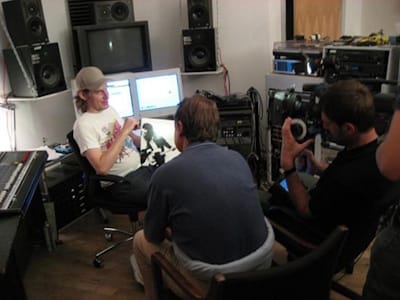
After 2010, Arcangel garnered growing recognition from major museums and art institutions, leading to exhibitions at prestigious venues. In 2011, he held a solo exhibition at the Whitney Museum of American Art titled Cory Arcangel: Pro Tools. The exhibition showcased a diverse range of works - including video games, single-channel videos, kinetic sculptures, prints, and pen plotter drawings - all created through a mix of professional and amateur technologies.
Arcangel's approach emphasized the interplay between these digital tools and the vernacular aesthetics they generate within contemporary culture, highlighting how these tools help shape the look, feel, and sensibility of modern culture - especially through the lens of everyday or "low-brow" internet visuals.
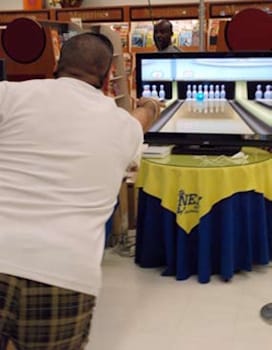
The highlight of the exhibition was Various Self Playing Bowling Games (2011), an immersive installation featuring large-scale projections of bowling video games spanning from the late 1970s to the 2000s. Each game had been hacked by Arcangel to roll only gutter balls, transforming what would typically be a demonstration of skill into an exercise in futility. Presented in chronological order, these projections traced the evolution of video game bowling and reflected the history of digital graphics - from pixelated abstraction to increasingly sophisticated realism. According to Arcangel, this multi-channeled installation is "similar to the (Super Mario) Clouds in many many ways, it's about repetition; the digital representation of the natural."
Beyond his artistic practice, Arcangel has extended his engagement with digital culture into entrepreneurial ventures. In 2014, he launched Arcangel Surfware, a merchandise and publishing imprint dedicated to the "internet-enabled lifestyle," a way of living that revolves around constant internet access, where people use digital devices for work, entertainment, communication, and daily tasks. The brand offers a range of products designed for digital age living including loungewear, sweatpants, bedsheets, and fidget spinners. Arcangel Surfware also collaborates with musicians, bridging experimental and pop influences - most notably through projects involving Tony Conrad and the indie pop band Wet.
Recent work
In 2015, Arcangel moved to Stavanger, Norway, the hometown of his wife Hanne Mugaas, now director of Kunsthall Stavanger. In an industrial part of town, he launched a hybrid store and gallery called Arcangel Surfware Flagship and Flagship A.S. The gallery, Flagship A.S., hosts three single-work exhibitions annually, focusing on historical Video Art. The inaugural show featured New York-based artist Burt Barr's Watching the Paint Dry: Red, a minimal video depicting exactly what its title suggests. The second exhibition coincided with the flagship store's relaunch, presenting artist-musician Steina Vasulka's Let It Be, in which Vasulka lip-syncs to the Beatles song in an extreme close-up, showing only her mouth.
The shop, spanning just 350 square feet, showcases Arcangel's collaborations with local fabricators alongside previous Surfware collections. Arcangel describes the space as looking "a little bit like a cellphone repair shop, and a little bit like a clothing store... It's kind of unclear what it is, which is what I was kind of going for." Arcangel enjoys personally engaging with visitors whenever he is in town, explaining, "When people come in, I kind of chew their ear off about the artwork." Arcangel expressed that he would never imagine launching such a project in New York, stating, "I don't think New York needs another store, especially my store, or even another gallery. But in Stavanger, I felt like, Why not? When else am I ever going to do something in a canning factory?"
Aside from curating his Norwegian space, Arcangel continues his art projects. For example, /roʊˈdeɪoʊ/ Let's Play: HOLLYWOOD (2017-2021), involved a custom-built Machine Learning computer that plays the mobile game Kim Kardashian: Hollywood, reflecting on themes of celebrity culture and artificial intelligence. Arcangel's practice often involves repurposing obsolete technologies to comment on their aesthetic and cultural significance.
In recent years, Arcangel has broadened his artistic scope to include large-scale public installations and collaborative projects that explore contemporary digital aesthetics. In 2024, he debuted &, a monumental video installation displayed on the façade of Chicago's Merchandise Mart. Developed in partnership with designer and programmer Henry Van Dusen, the piece utilized custom-built software to process footage of natural landscapes from Chicago and Stavanger, reinterpreting them as abstract, pixelated animations evocative of heat maps.
The Legacy of Cory Arcangel
Arcangel's legacy is best understood within a lineage that links Marcel Duchamp, Sol LeWitt, and Nam June Paik to Post-Internet strategies. From Duchamp, he inherits the readymade and the subversive reframing of context as art. From LeWitt, he draws the primacy of the idea over the object, the translation of instructions into form, and the use of seriality and systems as creative engines. From Paik, he takes the electronic imagination: the recognition that media technologies themselves - television, video, or video games - are cultural materials ripe for artistic reorientation.
Arcangel's loops, glitches, and self-playing works extend this lineage by embodying an "aesthetics of failure" reminiscent of Beckett, Dada, and Fluxus, reimagined for digital culture. Treating obsolete media as his palette, he formalizes digital decay as a distinctly 21st-century aesthetic. Projects such as Let's Play Majerus G3 frame digital preservation itself as an artistic act, positioning him as both creator and cultural archivist. His embrace of open-source platforms, DIY aesthetics, and educational tutorials underscores a commitment to accessibility, encouraging the public to experiment with technology on their own terms. Collaborations with musicians, designers, and programmers - including Tony Conrad, Jacob Ciocci, and Olia Lialina - highlight the collaborative and cross-disciplinary nature of his practice.
Unlike many digital artists who pursue high-tech spectacle, Arcangel favors simplicity, naïveté, and playful absurdity. His works often evoke amusement, surprise, or even frustration, leaving audiences with the sense of being gently trolled. As critic Emily Hall observes, "Arcangel is not the first artist to arrive at art-historical forms through technological means," yet "he simply lets the tools be tools and asks whether the results can be deemed a successful failure; he willfully disregards his materials, itself a time-honored strategy for artmaking. These works are considerably more interesting in the context of his previous efforts than they are on their own, raising as they do questions of intent, effort, and historical progression."
Arcangel's art is frequently read through the lens of nostalgia - both a response to the rapid evolution of digital culture and a critique of the divide between high and low art. As critic Katie Kitamura notes, he is "a devotee of obsolescence" who "resuscitates out-of-date technology [and] traces the way the formerly innovative passes into uselessness, and he endeavors to bring the redundant back into partial and modified use - an imperfect resuscitation of old technologies." This fascination with technological decay and digital ephemera speaks to broader concerns about the fleeting nature of innovation, exposing the tension between progress and obsolescence that defines contemporary culture.
Influences and Connections
![No image available]() Tony Conrad
Tony Conrad![No image available]() JODI (Joan Heemskerk & Dirk Paesmans)
JODI (Joan Heemskerk & Dirk Paesmans)![No image available]() Olia Lialina
Olia Lialina

![No image available]() Jayson Musson
Jayson Musson![No image available]() Paul B. Davis
Paul B. Davis![No image available]() Hito Steyerl
Hito Steyerl![No image available]() Jon Rafman
Jon Rafman![No image available]() Arnold Dreyblatt
Arnold Dreyblatt
-
![Conceptual Art]() Conceptual Art
Conceptual Art -
![Appropriation Art]() Appropriation Art
Appropriation Art ![No image available]() Post-Internet Art
Post-Internet Art![No image available]() New Media Art
New Media Art![No image available]() Hacktivist Art
Hacktivist Art


![Petra Cortright]() Petra Cortright
Petra Cortright![No image available]() Ed Fornieles
Ed Fornieles![No image available]() Hito Steyerl
Hito Steyerl![No image available]() Michael Bell-Smith
Michael Bell-Smith![No image available]() Evan Roth
Evan Roth

![No image available]() Tabor Robak
Tabor Robak![No image available]() Simon Denny
Simon Denny![No image available]() Daniel Keller
Daniel Keller![No image available]() DIS Collective
DIS Collective![No image available]() LaTurbo Avedon
LaTurbo Avedon
-
![Conceptual Art]() Conceptual Art
Conceptual Art -
![Appropriation Art]() Appropriation Art
Appropriation Art ![No image available]() Post-Internet Art
Post-Internet Art![No image available]() Game Art
Game Art![No image available]() New Media Art
New Media Art
Useful Resources on Cory Arcangel
- Cory Arcangel: All the Small Things (Heart Future Ixhibition Program)
- Cory Arcangel and Stine Janvin: Identity Pitches
- Cory Arcangel: The Sharper Image
- Cory Arcangel: The Source Digest
- Cory Arcangel & Olia Lialina: Asymmetrical Response
- Cory Arcangel: Beige
- This is all so crazy, everybody seems so famous
- Title TK: An Anthology