Ask The Art Story AI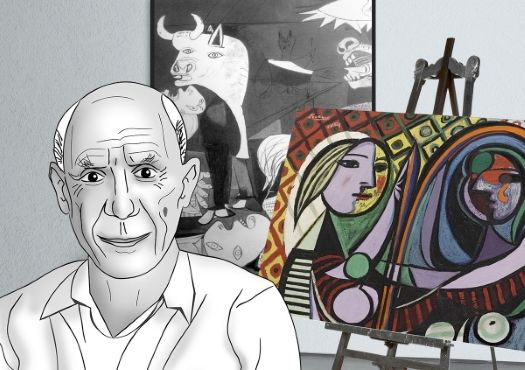


Summary of Pablo Picasso
Pablo Picasso was the most dominant and influential artist of the first half of the 20th century. Associated most of all with pioneering Cubism, alongside Georges Braque, he also invented collage and made major contributions to Symbolism and Surrealism. He saw himself above all as a painter, yet his sculpture was greatly influential, and he also explored areas as diverse as printmaking and ceramics. Finally, he was a famously charismatic personality; his many relationships with women not only filtered into his art but also may have directed its course, and his behavior has come to embody that of the bohemian modern artist in the popular imagination.
Accomplishments
- It was a confluence of influences - from Paul Cézanne and Henri Rousseau, to archaic and tribal art - that encouraged Picasso to lend his figures more structure and ultimately set him on the path towards Cubism, in which he deconstructed the conventions of perspective that had dominated painting since the Renaissance. These innovations would have far-reaching consequences for practically all of modern art, revolutionizing attitudes to the depiction of form in space.
- Picasso's immersion in Cubism also eventually led him to the invention of collage, in which he abandoned the idea of the picture as a window on objects in the world, and began to conceive of it merely as an arrangement of signs that used different, sometimes metaphorical means, to refer to those objects. This too would prove hugely influential for decades to come.
- Picasso had an eclectic attitude to style, and although, at any one time, his work was usually characterized by a single dominant approach, he often moved interchangeably between different styles - sometimes even in the same artwork.
- His encounter with Surrealism, although never transforming his work entirely, encouraged not only the soft forms and tender eroticism of portraits of his mistress Marie-Therese Walter, but also the starkly angular imagery of Guernica (1937), the century's most famous anti-war painting.
- Picasso was always eager to place himself in history, and some of his greatest works, such as Les Demoiselles d'Avignon (1907), refer to a wealth of past precedents - even while overturning them. As he matured he became only more conscious of assuring his legacy, and his late work is characterized by a frank dialogue with Old Masters such as Ingres, Velazquez, Goya, and Rembrandt.
The Life of Pablo Picasso
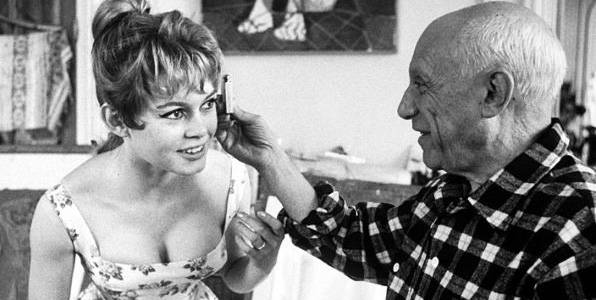
"I paint objects as I think them, not as I see them." Said Picasso, and whether he was partnering with Braque on Cubism or spending time with the poets he admired, or the muses he loved and craved, he was finding new ways to see, and represent what he saw. His life is a virtual progression of modernism.
Important Art by Pablo Picasso

The Soup
La Soupe is characteristic of the somber melancholy of Picasso's Blue Period, and it was produced at the same time as a series of other pictures devoted to themes of destitution, old age, and blindness. The picture conveys something of Picasso's concern with the miserable conditions he witnessed while coming of age in Spain, and it is no doubt influenced by the religious painting he grew up with, and perhaps specifically by El Greco. But the picture is also typical of the wider Symbolist movement of the period. In later years Picasso dismissed his Blue Period works as "nothing but sentiment"; critics have often agreed with him, even though many of these pictures are iconic, and of course, now unbelievably expensive.
Oil on canvas - The Art Institute of Chicago

Portrait of Gertrude Stein
Gertrude Stein was an author, close friend, and even supporter of Picasso, and was integral to his growth as an artist. This portrait, in which Stein is wearing her favorite brown velvet coat, was made just a year before Les Demoiselles d'Avignon, and marks an important stage in his evolving style. In contrast to the flat appearance of the figures and objects in some of the Blue and Rose period works, the forms in this portrait seem almost sculpted, and indeed they were influenced by the artist's discovery of archaic Iberian sculpture. One can almost sense Picasso's increased interest in depicting a human face as a series of flat planes. Stein claimed that she sat for the artist some ninety times, and although that may be an exaggeration, Picasso certainly wrestled long and hard with painting her head. After approaching it in various ways, abandoning each attempt, one day he painted it out altogether, declaring "I can't see you any longer when I look," and soon abandoned the picture. It was only some time later, and without the model in front of him, that he completed the head.
Oil on canvas - The Metropolitan Museum of Art, New York
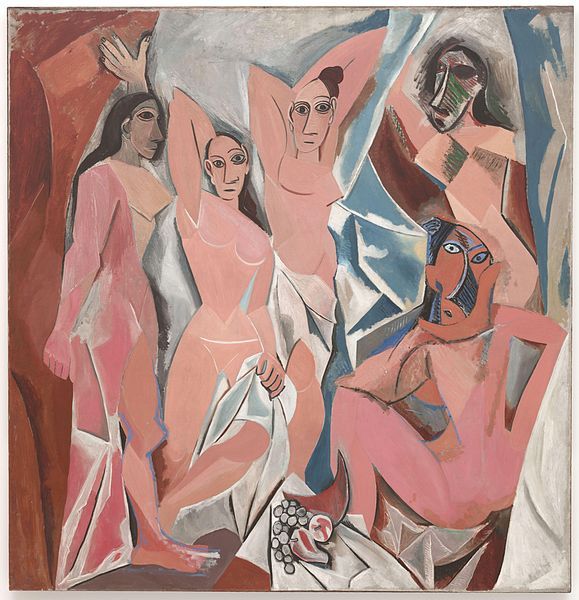
Les Demoiselles d'Avignon
This painting was shocking even to Picasso's closest artist friends both for its content and its execution. The subject matter of nude women was not in itself unusual, but the fact that Picasso painted the women as prostitutes in aggressively sexual postures was novel. Picasso's studies of Iberian and tribal art is most evident in the faces of three of the women, which are rendered as mask-like, suggesting that their sexuality is not just aggressive, but also primitive. Picasso also went further with his spatial experiments by abandoning the Renaissance illusion of three-dimensionality, instead presenting a radically flattened picture plane that is broken up into geometric shards, something Picasso borrowed in part from Paul Cézanne's brushwork. For instance, the leg of the woman on the left is painted as if seen from several points of view simultaneously; it is difficult to distinguish the leg from the negative space around it making it appear as if the two are both in the foreground.
The painting was widely thought to be immoral when it was finally exhibited in public in 1916. Braque is one of the few artists who studied it intently in 1907, leading directly to his Cubist collaborations with Picasso. Because Les Demoiselles predicted some of the characteristics of Cubism, the work is considered proto or pre Cubism.
Oil on canvas - The Museum of Modern Art, New York

Still Life with Chair Caning
Still Life with Chair Caning is celebrated for being modern art's first collage. Picasso had affixed preexisting objects to his canvases before, but this picture marks the first time he did so with such playful and emphatic intent. The chair caning in the picture in fact comes from a piece of printed oilcloth - and not, as the title suggests, an actual piece of chair caning. But the rope around the canvas is very real, and serves to evoke the carved border of a café table. Furthermore, the viewer can imagine that the canvas is a glass table, and the chair caning is the actual seat of the chair that can be seen through the table. Hence the picture not only dramatically contrasts visual space as is typical of Picasso's experiments, it also confuses our sense of what it is that we are looking at.
Oil on canvas - The National Gallery, London
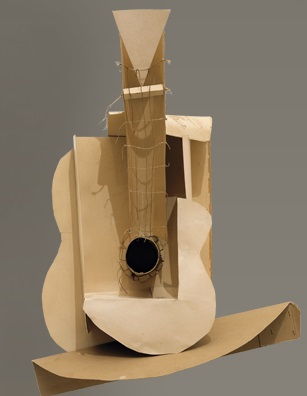
Maquette for Guitar
Picasso's experiments with collaged elements such as those in Still Life with Chair Caning encouraged him to reconsider traditional sculpture as well. Rather than a collage, however, Maquette for Guitar is an assemblage or three-dimensional collage. Picasso took pieces of cardboard, paper, string, and wire that he then folded, threaded, and glued together, making it the first sculpture assembled from disparate parts. The work is also innovative because it is not a solid material surrounded by a void, but instead fluidly integrates mass and its surrounding void. Picasso has translated the Cubist interest in multiple perspectives and geometric form into a three-dimensional medium, using non-traditional art materials that continue to challenge the distinction between high art and popular culture as he did in Ma Jolie (1911-12).
Paperboard, paper, thread, string, twine, and coated wire - The Museum of Modern Art, New York

Bowl of Fruit, Violin and Bottle
Picasso's Bowl of Fruit, Violin and Bottle is typical of his Synthetic Cubism, in which he uses various means - painted dots, silhouettes, grains of sand - to allude to the depicted objects. This combination of painting and mixed media is an example of the way Picasso "synthesized" color and texture - synthesizing new wholes after mentally dissecting the objects at hand. During his Analytic Cubist phase Picasso had suppressed color, so as to concentrate more on the forms and volumes of the objects, and this rationale also no doubt guided his preference for still life throughout this phase. The life of the café certainly summed up modern Parisian life for the artists - it was where he spent a good deal of time talking with other artists - but the simple array of objects also ensured that questions of symbolism and allusion might be kept under control.
Oil on canvas - The National Gallery, London
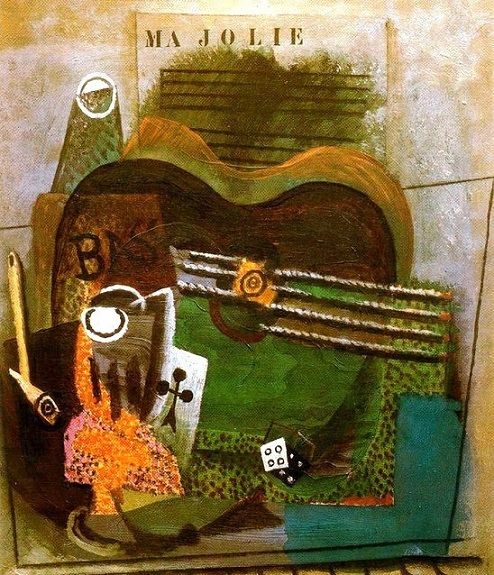
Ma Jolie
In this work, Picasso challenges the distinction between high art and popular culture, pushing his experiments in new directions. Building on the geometric forms of Les Demoiselles d'Avignon, Picasso moves further towards abstraction by reducing color and by increasing the illusion of low-relief sculpture. Most significantly, however, Picasso included painted words on the canvas. The words, "ma jolie" on the surface not only flatten the space further, but they also liken the painting to a poster because they are painted in a font reminiscent of one used in advertising. This is the first time that an artist so blatantly uses elements of popular culture in a work of high art. Further linking the work to pop culture and to the everyday, "Ma Jolie" was also the name of a popular tune at the time as well as Picasso's nickname for his girlfriend.
Oil on canvas - The Museum of Modern Art, New York
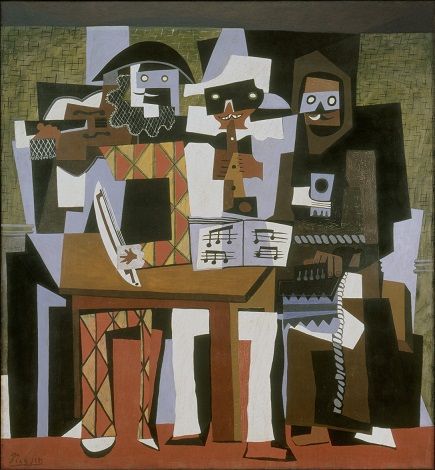
The Three Musicians
Picasso painted two version of this picture. The slightly smaller version hangs in the Philadelphia Museum of Art, but both are unusually large for Picasso's Cubist period, and he may have chosen to work on this grand scale because they mark the conclusion of his Synthetic Cubism, which had occupied him for nearly a decade. He painted it in the same summer as the very different, classical painting Three Women at the Spring. Some have interpreted the pictures as nostalgic remembrances of the artist's early days: Picasso sits in the center - as ever the Harlequin - and his old friends Guillaume Apollinaire, who died in 1918, and Max Jacob, from whom he had become estranged, sit on either side. However, another argument links the pictures to Picasso's work for the Ballets Russes, and identifies the characters with more recent friends. Either way, the costumes of the figures certainly derive from traditions in Italian popular theatre.
Oil on canvas - The Philadelphia Museum of Art, Philadelphia

Three Women at the Spring
Picasso made careful studies in preparation for this, his most ambitious treatment of what is an old classical subject. It makes reference to earlier pictures by Poussin and Ingres - titans of classical painting - but it also draws inspiration from Greek sculpture, and indeed the massive gravity of the figures is very sculptural. Critics have speculated that the subject appealed to him because of the recent birth of his first son, Paulo; the somber attitude of the figures may be explained by the contemporary preoccupation in France with mourning the dead of the First World War.
Oil on canvas - The Museum of Modern Art, New York

Large Nude in a Red Armchair
When Picasso's work came under the influence of the Surrealists in the late 1920s, his forms often took on melting, organic contours. This work was completed in May 1929, around the same time the Surrealists were preoccupied with the way in which ugly and disgusting imagery might provide a route into the unconscious. It was clearly intended to shock, and it may have been influenced by Salvador Dalí - and Joan Miro. It is thought that the picture represents the former dancer Olga Koklova, whose relationship with Picasso was failing around this time.
Oil on canvas - Musée National Picasso, Paris
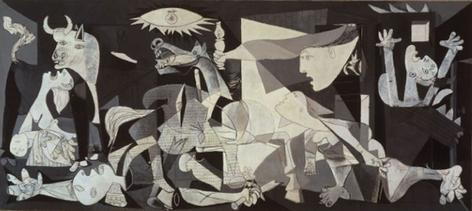
Guernica
This painting was Picasso's response to the bombing of the Basque town named Guernica on April 26, 1937 during the Spanish Civil War. Painted in one month - from May to June 1937 - it became the centerpiece of the Spanish pavilion at the Paris World's Fair later that year. While it was a sensation at the fair, it was consequently banned from exhibition in Spain until military dictator Francisco Franco fell from power in 1975. Much time has been spent trying to decode the symbolism of the picture, and some believe that the dying horse in the center of the painting alludes to the people of Spain. The minotaur may allude to bull fighting, a favorite national past-time in Spain, though it also had complex personal significance for the artist. Although Guernica is undoubtedly modern art's most famous response to war, critics have been divided on its success as a painting.
Oil on canvas - Museo Nacional Centro de Arte Reina Sofia, Madrid
Biography of Pablo Picasso
Childhood
Pablo Ruiz Picasso was born into a creative family. His father was a painter, and he quickly showed signs of following the same path: his mother claimed that his first word was "piz," a shortened version of lapiz, or pencil, and his father was his first teacher. Picasso began formally studying art at the age of 11. Several paintings from his teenage years still exist, such as First Communion (1895), which is typical in its conventional, if accomplished, academic style. His father groomed the young prodigy to be a great artist by getting Picasso the best education the family could afford and visiting Madrid to see works by Spanish Old Masters. And when the family moved to Barcelona so his father could take up a new post, Picasso continued his art education.
Early Training
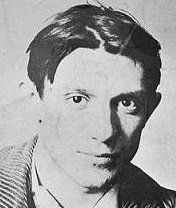
It was in Barcelona that Picasso first matured as a painter. He frequented the Els Quatre Gats, a café popular with bohemians, anarchists, and modernists. And he came to be familiar with Art Nouveau and Symbolism, and artists such as Edvard Munch and Henri Toulouse-Lautrec. It was here that he met Jaime Sabartes, who would go on to be his fiercely loyal secretary in later years. This was his introduction to a cultural avant-garde, in which young artists were encouraged to express themselves.
During the years from 1900 to 1904, Picasso traveled frequently, spending time in Madrid and Paris, in addition to spells in Barcelona. Although he began making sculpture during this time, critics characterize this time as his Blue Period, after the blue/grey palette that dominated his paintings. The mood of the work was also insistently melancholic. One might see the beginnings of this in the artist's sadness over the suicide of Carlos Casegemas, a friend he had met in Barcelona, though the subjects of much of the Blue Period work were drawn from the beggars and prostitutes he encountered in city streets. The Old Guitarist (1903) is a typical example of both the subject matter and the style of this phase.
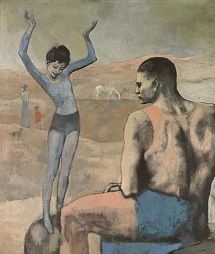
In 1904, Picasso's palette began to brighten, and for a year or more he painted in a style that has been characterized as his Rose Period. He focused on performers and circus figures, switching his palette to various shades of more uplifting reds and pinks. And around 1906, soon after he had met artist Georges Braque, his palette darkened, his forms became heavier and more solid in aspect, and he began to find his way towards Cubism.
Mature Period
In the past critics dated the beginnings of Cubism to his early masterpiece Les Demoiselles d'Avignon (1907). Although that work is now seen as transitional (lacking the radical distortions of his later experiments), it was clearly crucial in his development since it was heavily influenced by African sculpture and ancient Iberian art. It is said to have inspired Braque to paint his own first series of Cubist paintings, and in subsequent years the two would mount one of the most remarkable collaborations in modern painting, sometimes eagerly learning from each other, at other times trying to outdo one another in their fast-paced and competitive race to innovate. They visited each other daily during their formulation of this radical technique, and Picasso described himself and Braque as "two mountaineers, roped together." In their shared vision, multiple perspectives on an object are depicted simultaneously by being fragmented and rearranged in splintered configurations. Form and space became the most crucial elements, and so both artists restricted their palettes to earth tones, in stark contrast with the bright colors used by the Fauves that had preceded them. Picasso would always have an artist or a group he collaborated with, but as Braque biographer Alex Danchev wrote: Picasso's "Braque period" was "the most concentrated and fruitful of his whole career."
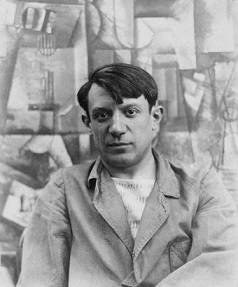
Picasso rejected the label "Cubism," especially when critics began to differentiate between the two key approaches he was said to pursue - Analytic and Synthetic. He saw his body of work as a continuum. But it is beyond doubt that there was a change in his work around 1912. He became less concerned with representing the placement of objects in space than in using shapes and motifs as signs to playfully allude to their presence. He developed the technique of collage, and from Braque he learned the related method of papiers colles, which used cutout pieces of paper in addition to fragments of existing materials. This phase has since come to be known as the "Synthetic" phase of Cubism, due to its reliance on various allusions to an object in order to create the description of it. This approach opened up the possibilities of more decorative and playful compositions, and its versatility encouraged Picasso to continue to utilize it well in the 1920s.
But the artist's dawning interest in ballet also sent his work in new directions around 1916. This was in part prompted by meeting the poet, artist, and filmmaker Jean Cocteau. Through him he met Sergei Diaghilev, and went on to produce numerous set designs for the Ballets Russes.
For some years Picasso had occasionally toyed with classical imagery, and he began to give this free rein in the early 1920s. His figures became heavier and more massive, and he often imagined them against backgrounds of a Mediterranean Golden Age. They have long been associated with the wider conservative trends of Europe's so-called rappel a l'ordre, (return to order), a period of art now known as Interwar Classicism.
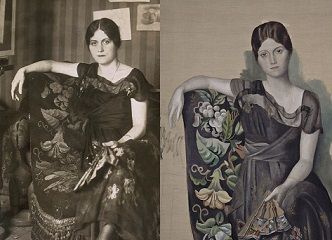
His encounter with Surrealism in the mid 1920s again prompted a change of direction. His work became more expressive, and often violent or erotic. This phase in his work can also be correlated with the period in his personal life when his marriage to dancer Olga Khokhlova began to break down and he began a new relationship with Marie-Therese Walter. Indeed, critics have often noted how changes in style in Picasso's work often go hand in hand with changes in his romantic relationships; his partnership with Khokhlova spanned the years of his interest in dance and, later, his time with Jacqueline Roque is associated with his late phase in which he became preoccupied with his legacy alongside the Old Masters. Picasso frequently painted the women he was in love with, and, as a result, his tumultuous personal life is well represented on canvas. He was known to have kept many mistresses, most famously Eva Gouel, Dora Maar, and Françoise Gilot. He married twice, and had four children, Claude, Paloma, Maia, and Paulo.
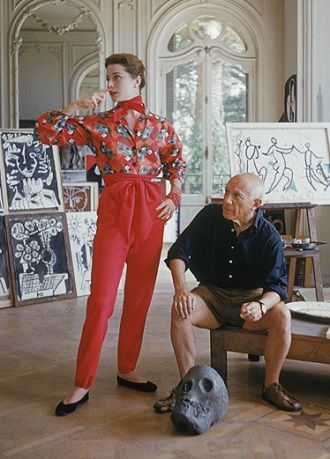
In the late 1920s he began a collaboration with the sculptor Julio González. This was his most significant creative partnership since he had worked alongside Braque, and it culminated in welded metal sculptures, which were subsequently highly influential.
As the 1930s wore on, political concerns began to cloud Picasso's view, and these would continue to preoccupy him for some time. His disgust at the bombing of civilians in the Basque town of Guernica during the Spanish Civil War prompted him to create the painting Guernica, in 1937. During World War II he stayed in Paris, and the German authorities left him sufficiently unmolested to allow him to continue his work. However, the war did have a huge impact on Picasso, with his Paris painting collection confiscated by Nazis and some of his closest Jewish friends killed. Picasso made works commemorating them - sculptures employing hard, cold materials such as metal, and a particularly violent follow up to Guernica, entitled The Charnel House (1945). Following the war he was also closely involved with the Communist Party, and several major pictures from this period, such as War in Korea (1951), make that new allegiance clear.
Late Years and Death
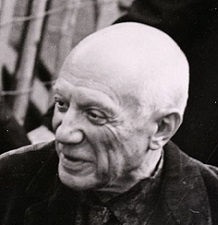
Throughout the 1950s and 1960s, Picasso worked on his own versions of canonical masterpieces by artists such as Nicolas Poussin, Diego Velázquez, and El Greco. In the later years of his life, Picasso sought solace from his celebrity, marrying Jacqueline Rogue in 1961. His later paintings were heavily portrait-based and their palettes nearly garish in hue. Critics have generally considered them inferior to his earlier work, though in recent years they have been more enthusiastically received. He also created many ceramic and bronze sculptures during this later period. He died of a heart attack in the South of France in 1973.
The Legacy of Pablo Picasso
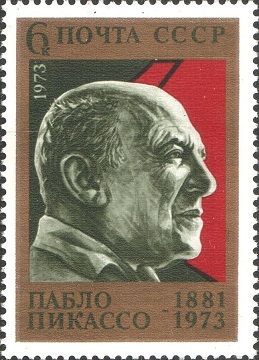
Picasso's influence was profound and far-reaching, and remarkably, many periods of his life were influential in their own right. His early Symbolist pieces remain iconic, while innovations in pioneering Cubism established a set of pictorial problems, devices, and approaches, which remained important well into the 1950s. Even after the war, even though the energy in avant-garde art shifted to New York, Picasso remained a titanic figure, and one who could never be ignored. Indeed, even though the Abstract Expressionists could be said to have superseded aspects of Cubism (even while being strongly influenced by him), The Museum of Modern Art in New York has been called "the house that Pablo built," because it has so widely exhibited the artist's work. MoMA's opening exhibition in 1930 included fifteen paintings by Picasso. He was also a part of Alfred Barr's highly influential survey shows Cubism and Abstract Art (1936) and Fantastic Art, Dada, Surrealism (1936-37). Although his influence undoubtedly waned in the 1960s, he had by that time become a pop icon, and the public's fascination with his life story continue to fuel interest in his work.
Influences and Connections


Useful Resources on Pablo Picasso
-
![Mind Blowing Documentaries - Picasso]() 859 viewsMind Blowing Documentaries - PicassoOur PickTrailer. Directed by Michael Blackwood
859 viewsMind Blowing Documentaries - PicassoOur PickTrailer. Directed by Michael Blackwood -
![Mind Blowing Documentaries - Picasso]() 0 viewsMind Blowing Documentaries - PicassoIncludes interview with famous Picasso Biographer: John Richardson
0 viewsMind Blowing Documentaries - PicassoIncludes interview with famous Picasso Biographer: John Richardson -
![Pablo Picasso - Masters of the Modern Era]() 657k viewsPablo Picasso - Masters of the Modern EraBy British art critic Alastair Sooke
657k viewsPablo Picasso - Masters of the Modern EraBy British art critic Alastair Sooke -
![Overview by Prof Ian Aaronson]() 7k viewsOverview by Prof Ian AaronsonOur PickHighlights of Picasso's career, particular emphasis on Cubist years
7k viewsOverview by Prof Ian AaronsonOur PickHighlights of Picasso's career, particular emphasis on Cubist years -
![How To Understand A Picasso]() 2.0M viewsHow To Understand A PicassoOur PickConcise and down-to-earth intro to looking at art of Picasso by NerdWrite
2.0M viewsHow To Understand A PicassoOur PickConcise and down-to-earth intro to looking at art of Picasso by NerdWrite -
![Seven Women, Seven Works]() 38k viewsSeven Women, Seven WorksOverview centred around the main muses of Picasso's life
38k viewsSeven Women, Seven WorksOverview centred around the main muses of Picasso's life -
![Pablo Picasso - Cubism and more]() 38k viewsPablo Picasso - Cubism and moreHighlighted works from whole career, but emphasis on Cubism
38k viewsPablo Picasso - Cubism and moreHighlighted works from whole career, but emphasis on Cubism


-
![Still-Life with Chair Caning (1912) by smARThistory]() 57k viewsStill-Life with Chair Caning (1912) by smARThistoryConversation around the artwork
57k viewsStill-Life with Chair Caning (1912) by smARThistoryConversation around the artwork -
![Nude, Green Leaves, and Bust (1932) by T.J. Clark]() 6k viewsNude, Green Leaves, and Bust (1932) by T.J. ClarkIncluding comparison to Picasso's 'Nude on a Black Sofa' (1932) and other artworks
6k viewsNude, Green Leaves, and Bust (1932) by T.J. ClarkIncluding comparison to Picasso's 'Nude on a Black Sofa' (1932) and other artworks -
![Guernica (1937) by Simon Schama]() 55k viewsGuernica (1937) by Simon SchamaOur PickFocus on the Picasso during his creation of Guernica. Part of The Power of Art series
55k viewsGuernica (1937) by Simon SchamaOur PickFocus on the Picasso during his creation of Guernica. Part of The Power of Art series -
![Guernica (1937) by T.J. Clark]() 10k viewsGuernica (1937) by T.J. ClarkAnalysis by the Picasso scholar
10k viewsGuernica (1937) by T.J. ClarkAnalysis by the Picasso scholar


-
![Picasso at Work]() 0 viewsPicasso at WorkOur PickA collection of footage of Picasso painting
0 viewsPicasso at WorkOur PickA collection of footage of Picasso painting -
![The Rivalry between Picasso and Matisse]() 14k viewsThe Rivalry between Picasso and MatisseKirk Varnedoe and John Elderfield discuss Matisse-Picasso exhibition at MoMA
14k viewsThe Rivalry between Picasso and MatisseKirk Varnedoe and John Elderfield discuss Matisse-Picasso exhibition at MoMA


-
![Picasso and Braque Symposium: Un-Self-Contained]() 1k viewsPicasso and Braque Symposium: Un-Self-ContainedPicasso follows Cézanne's innovations to create Cubism - by art historian Charles Palermo
1k viewsPicasso and Braque Symposium: Un-Self-ContainedPicasso follows Cézanne's innovations to create Cubism - by art historian Charles Palermo -
![An Anecdotal History of Les Demoiselles d'Avignon]() 7k viewsAn Anecdotal History of Les Demoiselles d'AvignonInteresting perspective on and around the painting by art historian Beth Gersh-Nesic
7k viewsAn Anecdotal History of Les Demoiselles d'AvignonInteresting perspective on and around the painting by art historian Beth Gersh-Nesic -
![Les Demoiselles d'Avignon Lecture]() 2k viewsLes Demoiselles d'Avignon LectureFleming Museum Director and Picasso scholar Janie Cohen discusses the role of colonial photography in Africa on the artwork
2k viewsLes Demoiselles d'Avignon LectureFleming Museum Director and Picasso scholar Janie Cohen discusses the role of colonial photography in Africa on the artwork