Ask The Art Story AI

Definitions & Concepts 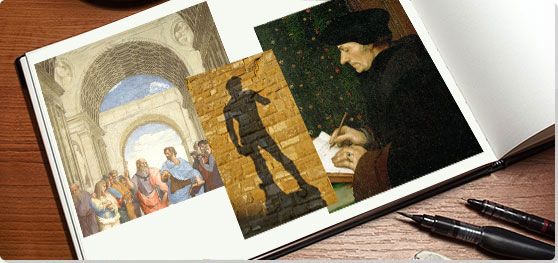
Humanism, the focus on individuals, not the centrality of the church, and on a rediscovery of the humanities, powerfully influenced the art of the Renaissance.
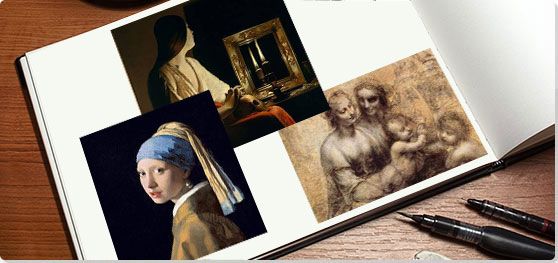
Emphasizing drama and depth, these Renaissance techniques allowed artists like Caravaggio, Leonardo da Vinci, and Rembrandt to illuminate visual narratives out from the shadows.
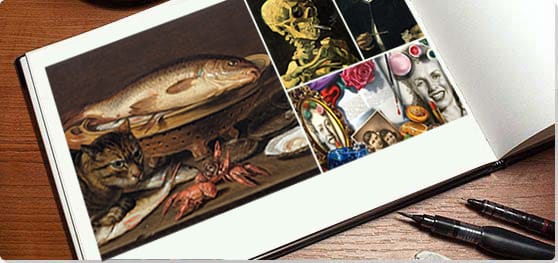
Memento Mori art works often remind the viewer of their own mortality, and Vanitas still-life works contain symbols of death.
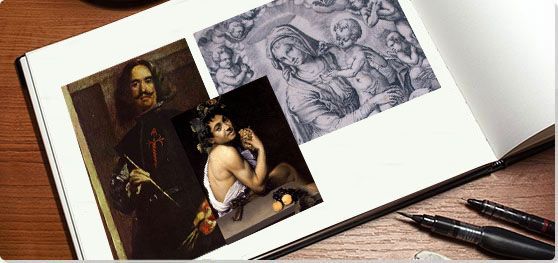
The term Old Masters refers to eminent European artists from the Renaissance through to early modernism.
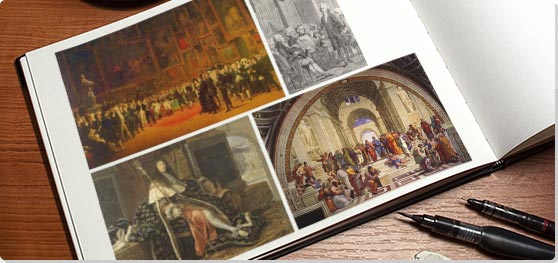
Academies flourished in the seventeenth and eighteenth centuries where artists received training and exhibited. These institutions set the national directions for art.
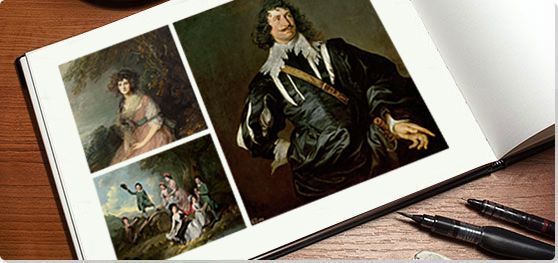
The term Grand Manner refers to a style of portraiture that emerged in Britain during the 18th century and was popular for in the United States.

Camera obscura is a way to project an image on a 2-dimensional surface that can be traced by the human hand - a device used by artists throughout history.
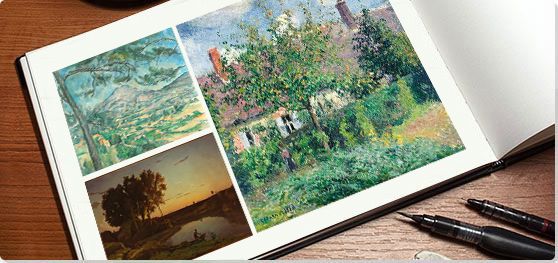
The Impressionists' interest in capturing the play of light on different natural surfaces made painting in the landscape essential.
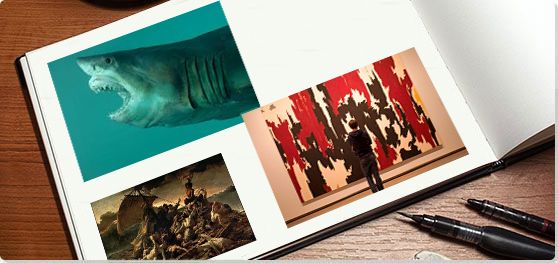
The Sublime via feelings of terror, awe, and infinity have for centuries been represented by important artists.
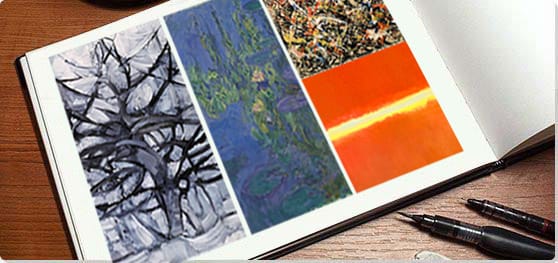
Controversial, empowering, and hugely influential to the present day, Abstraction allowed artists to explore new ways of expressing themselves.
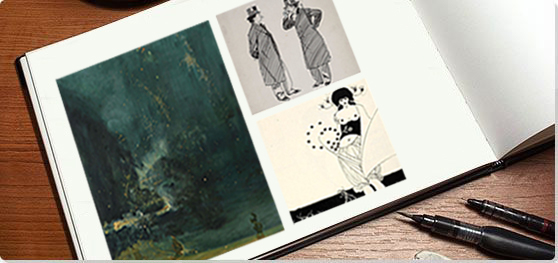
Art for Art's Sake idea defined, and uses of the concept in the history of visual art. Aesthetic Movement, Whistler, and more
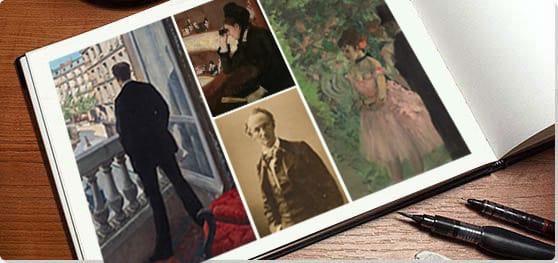
The flâneur, an urban spectator, was character type depicted by a number of artists including the Impressionists.
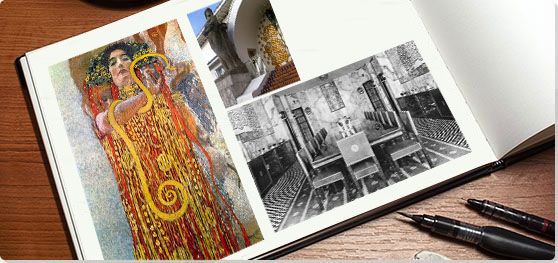
The German term Gesamtkunstwerk describes an artwork, design, or creative process where multiple art forms are combined to create a single whole.
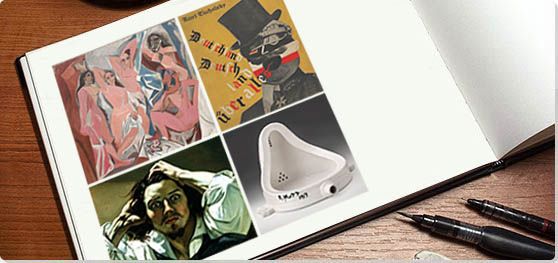
The phrase "avant-garde" was adapted to apply to the work of artists that worked on the social, political, and cultural revolutionary potential of much modern art.
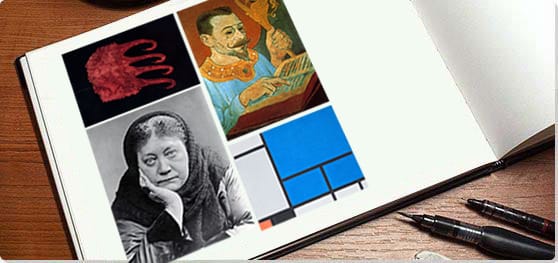
Theosophy is an occult belief system that has been extremely influential for a significant number of modern artists.
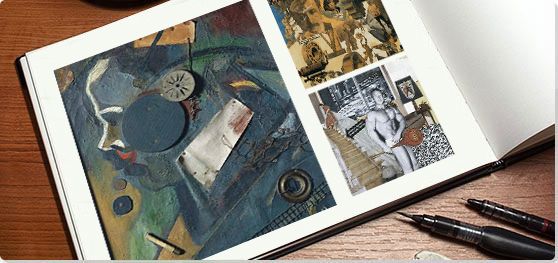
Collage is usually the repurposing pre-existing materials into new designs, often to produce a playful ambiguity upon reality. Highly influential, collage has impacted not only drawing and painting but also approaches to sculpture.
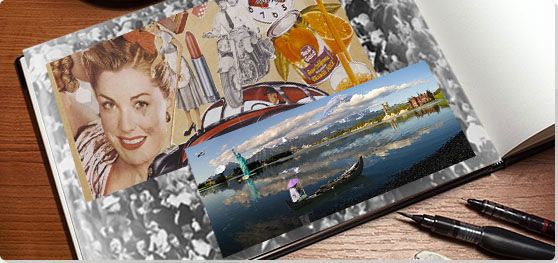
Photomontage is essentially a single artwork combined of two or more original or existing photos, produced to encourage audiences to consider the relationship between the grouped images.
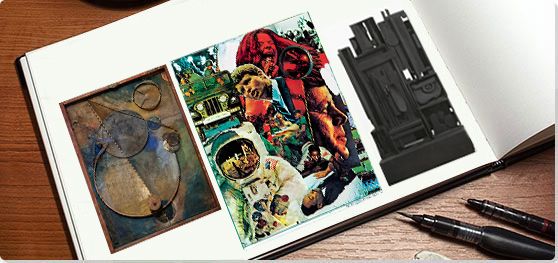
Assemblage is a style of sculpture inspired by the idea of introducing pre-existing, non-art objects into an art. With precedents in the work of Duchamp and Picasso, it flourished as a tendency in the 1950s and continues to be a prominent techinique today.
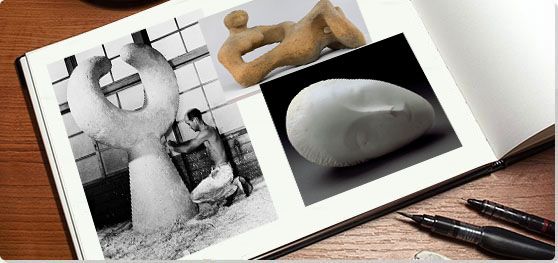
Direct Carving is the sculptural approach pioneered by Brâncu?i that rejected the established sculptural practice of making sculptures from clay models.
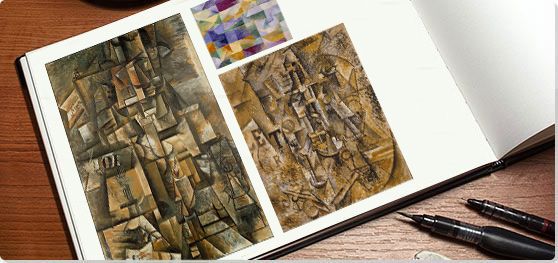
The Analytic phase of the Cubism movement focused on fracturing the depiction of subjects almost to complete abstraction.
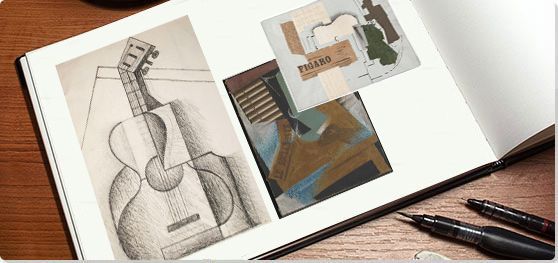
The Synthetic phase of the Cubism movement embraced a broader palette, simpler geometric planes, and less abstracted subjects while experimenting with collage and other techniques.
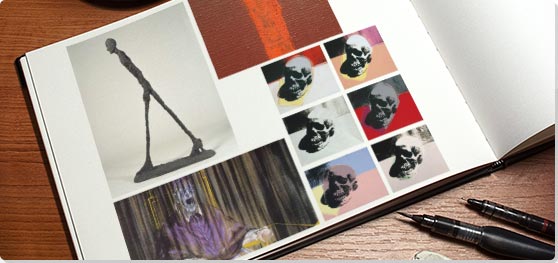
Existentialism deals largely with the complexities of individual human emotions, thoughts and responsibilities and the philosophy was widely used by various artist in the arena of modern art.
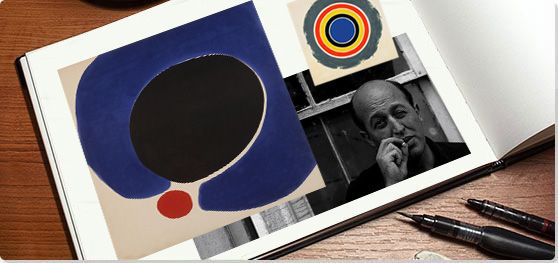
Formalism is an approach to interpreting art that emphasizes qualities such as color, line, shape, and texture. The belief that form can be detached from subject matter has been particularly important in shaping modern art.
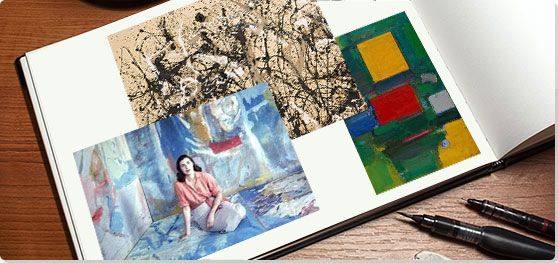
Advocates for medium specificity demanded that each art concentrate on that which made it unique. In painting's case, it was its "flatness" that made it distinct.
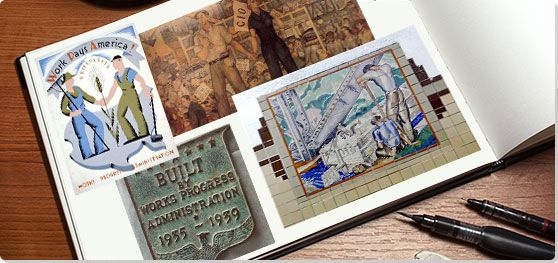
The government-funded Federal Art Project of the Works Progress Administration hired hundreds of artists who collectively created more than 100,000 paintings and murals and thousands of sculptures.
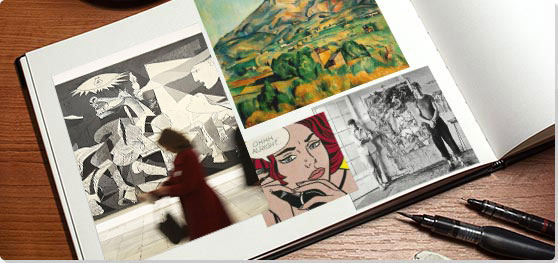
Modernism in Art is an approach to art making that promoted the new and industrial world, free from derivation and historical references. And for the new to be possible, old movements were often altogether abandoned, or deconstructed.
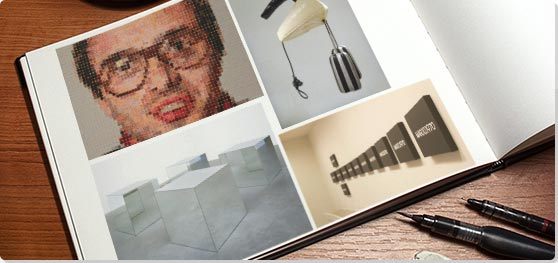
Postmodernism is a broad period of artmaking that occured after modernism - a period that was driven by a radical and forward thinking approach, ideas of technological positivity, and grand narratives of Western domination and progress.
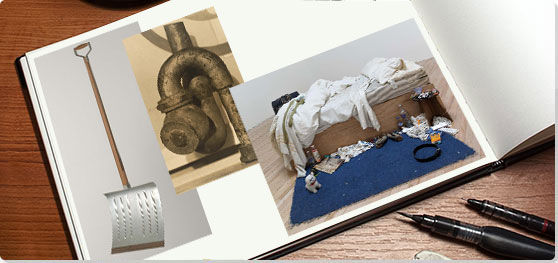
A readymade is a pre-existing, non-art object which is the artist deems to be art. Marcel Duchamp is credited with inventing the readymade, launching many approaches to future art marking.
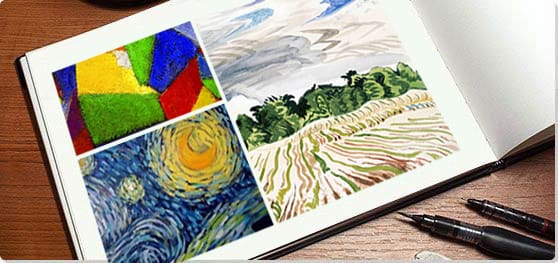
A "union of the senses", synesthesia refers to the experience of experiencingone sense through another: it might involve seeing sound, hearing music, or smelling color.
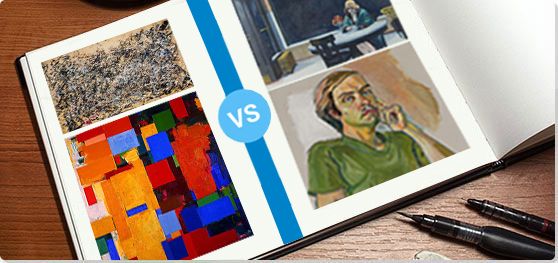
Comparison of figurative and abstract art - side-by-side chart. Includes examples and focused around the time of Abstract Expressionism.
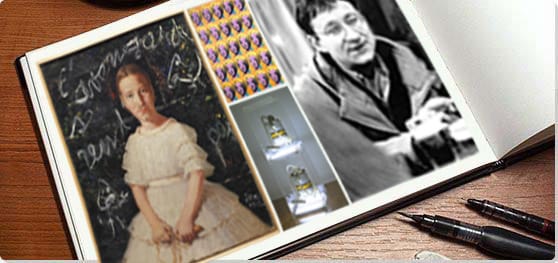
The idea "Society of the Spectacle" aimed to shatter materialistic illusions using art such as confrontational performances and even psycho-geographical walks.
Movements by Country 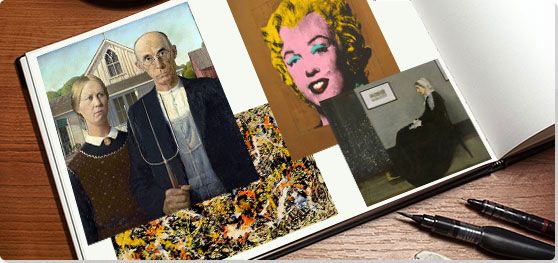
The artistic history of the US stretches from indigenous art and Hudson River School into Contemporary art. Enjoy our guide through the many American movements.
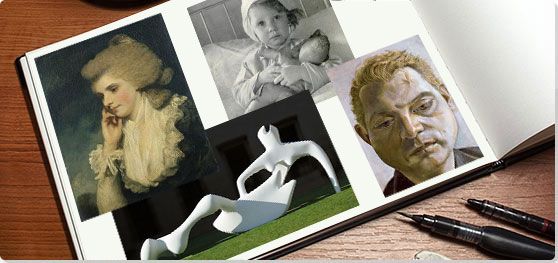
The British Isles have been hosts to some of the most important art movements and have produced top modern and contemporary artists.
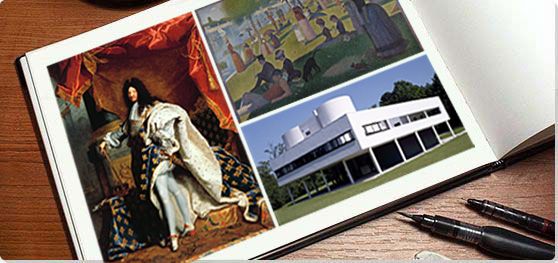
In many ways, the history of France and its culture are interconnected with the country's achievements in the arts.
Major Art Historians & Theorists 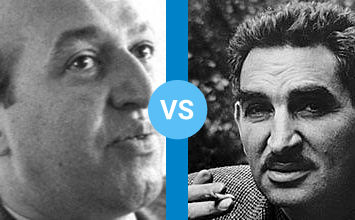
Many modern art movements have been supported and promoted by critics who have sought to shape understandings of the artists' work in distinct ways. Abstract Expressionism is notable for the contributions of two critics, Harold Rosenberg and Clement Greenberg, who put forward influential interpretations of the movement which were often starkly opposed...
Art Influencers and People that Shaped Our Visual Culture 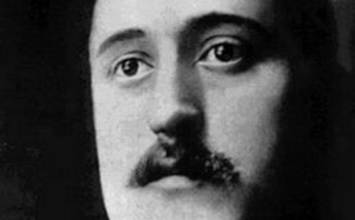
Guillaume Apollinaire was a French writer and art critic who advanced the avant-garde Cubists including Pablo Picasso, André Breton and Henri Rousseau. He is also credited with coining the term "Surrealism."
Humanism, the focus on individuals, not the centrality of the church, and on a rediscovery of the humanities, powerfully influenced the art of the Renaissance.
Emphasizing drama and depth, these Renaissance techniques allowed artists like Caravaggio, Leonardo da Vinci, and Rembrandt to illuminate visual narratives out from the shadows.
Memento Mori art works often remind the viewer of their own mortality, and Vanitas still-life works contain symbols of death.
The term Old Masters refers to eminent European artists from the Renaissance through to early modernism.
Academies flourished in the seventeenth and eighteenth centuries where artists received training and exhibited. These institutions set the national directions for art.
The term Grand Manner refers to a style of portraiture that emerged in Britain during the 18th century and was popular for in the United States.
Camera obscura is a way to project an image on a 2-dimensional surface that can be traced by the human hand - a device used by artists throughout history.
The Impressionists' interest in capturing the play of light on different natural surfaces made painting in the landscape essential.
The Sublime via feelings of terror, awe, and infinity have for centuries been represented by important artists.
Controversial, empowering, and hugely influential to the present day, Abstraction allowed artists to explore new ways of expressing themselves.
Art for Art's Sake idea defined, and uses of the concept in the history of visual art. Aesthetic Movement, Whistler, and more
The flâneur, an urban spectator, was character type depicted by a number of artists including the Impressionists.
The German term Gesamtkunstwerk describes an artwork, design, or creative process where multiple art forms are combined to create a single whole.
The phrase "avant-garde" was adapted to apply to the work of artists that worked on the social, political, and cultural revolutionary potential of much modern art.
Theosophy is an occult belief system that has been extremely influential for a significant number of modern artists.
Collage is usually the repurposing pre-existing materials into new designs, often to produce a playful ambiguity upon reality. Highly influential, collage has impacted not only drawing and painting but also approaches to sculpture.
Photomontage is essentially a single artwork combined of two or more original or existing photos, produced to encourage audiences to consider the relationship between the grouped images.
Assemblage is a style of sculpture inspired by the idea of introducing pre-existing, non-art objects into an art. With precedents in the work of Duchamp and Picasso, it flourished as a tendency in the 1950s and continues to be a prominent techinique today.
Direct Carving is the sculptural approach pioneered by Brâncu?i that rejected the established sculptural practice of making sculptures from clay models.
The Analytic phase of the Cubism movement focused on fracturing the depiction of subjects almost to complete abstraction.
The Synthetic phase of the Cubism movement embraced a broader palette, simpler geometric planes, and less abstracted subjects while experimenting with collage and other techniques.
Existentialism deals largely with the complexities of individual human emotions, thoughts and responsibilities and the philosophy was widely used by various artist in the arena of modern art.
Formalism is an approach to interpreting art that emphasizes qualities such as color, line, shape, and texture. The belief that form can be detached from subject matter has been particularly important in shaping modern art.
Advocates for medium specificity demanded that each art concentrate on that which made it unique. In painting's case, it was its "flatness" that made it distinct.
The government-funded Federal Art Project of the Works Progress Administration hired hundreds of artists who collectively created more than 100,000 paintings and murals and thousands of sculptures.
Modernism in Art is an approach to art making that promoted the new and industrial world, free from derivation and historical references. And for the new to be possible, old movements were often altogether abandoned, or deconstructed.
Postmodernism is a broad period of artmaking that occured after modernism - a period that was driven by a radical and forward thinking approach, ideas of technological positivity, and grand narratives of Western domination and progress.
A readymade is a pre-existing, non-art object which is the artist deems to be art. Marcel Duchamp is credited with inventing the readymade, launching many approaches to future art marking.
A "union of the senses", synesthesia refers to the experience of experiencingone sense through another: it might involve seeing sound, hearing music, or smelling color.
Comparison of figurative and abstract art - side-by-side chart. Includes examples and focused around the time of Abstract Expressionism.
The idea "Society of the Spectacle" aimed to shatter materialistic illusions using art such as confrontational performances and even psycho-geographical walks.
Movements by Country The artistic history of the US stretches from indigenous art and Hudson River School into Contemporary art. Enjoy our guide through the many American movements.
The British Isles have been hosts to some of the most important art movements and have produced top modern and contemporary artists.
In many ways, the history of France and its culture are interconnected with the country's achievements in the arts.
The artistic history of the US stretches from indigenous art and Hudson River School into Contemporary art. Enjoy our guide through the many American movements.
The British Isles have been hosts to some of the most important art movements and have produced top modern and contemporary artists.
In many ways, the history of France and its culture are interconnected with the country's achievements in the arts.
Many modern art movements have been supported and promoted by critics who have sought to shape understandings of the artists' work in distinct ways. Abstract Expressionism is notable for the contributions of two critics, Harold Rosenberg and Clement Greenberg, who put forward influential interpretations of the movement which were often starkly opposed...



Art Influencers and People that Shaped Our Visual Culture Guillaume Apollinaire was a French writer and art critic who advanced the avant-garde Cubists including Pablo Picasso, André Breton and Henri Rousseau. He is also credited with coining the term "Surrealism."
Guillaume Apollinaire was a French writer and art critic who advanced the avant-garde Cubists including Pablo Picasso, André Breton and Henri Rousseau. He is also credited with coining the term "Surrealism."