Below are biographies and analysis of the work of the artists who were central to Post-Impressionism. If a major artist is missing from the list, The Art Story has not had a chance yet to research their life and art.
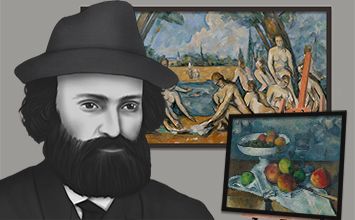
Paul Cézanne was an influential French Post-Impressionist painter whose depictions of the natural world, based on internal geometric planes, paved the way for Cubism and later modern art movements.
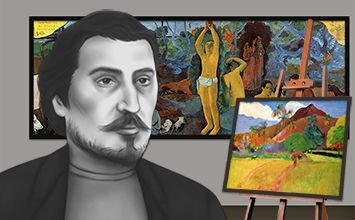
Paul Gauguin was a French Post-Impressionist artist who employed color fields and painterly strokes in his work. He is best known for his primitivist depictions of native life in Tahiti and Polynesia.
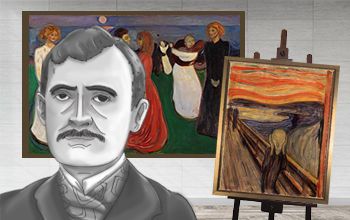
Norweigan painter and printmaker Edvard Munch was a pioneer of the German Expressionist movement. His works such as The Scream explored deeply psychological concepts in a Symbolist style.
Georges Seurat was a French painter who gave rise to the Post- and Neo-Impressionist artistic styles of the late 19th century. Seurat's greatest contribution to modern art was his development of Pointillism, a style of painting in which small dots of paint were applied to create a cohesive image. Combining the science of optics with painterly emotion, Pointillism evoked a visual harmony never before seen in modern art.
Vincent van Gogh was a Dutch painter, commonly associated with the Post-Impressionist period. As one of the most prolific and experimental artists of his time, van Gogh was a spontaneous painter and a master of color and perspective. Troubled by personal demons all his life, many historians speculate that van Gogh suffered from a bipolar disorder.