Below are biographies and analysis of the work of the artists who were central to Modern Sculpture. If a major artist is missing from the list, The Art Story has not had a chance yet to research their life and art.
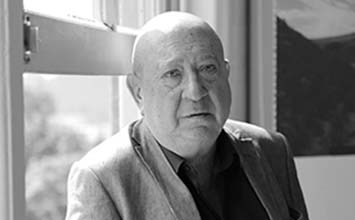
Carl Andre is an American Minimalist whose prominence rose in the late 1960s with a series of large public artworks and sculpture. His linear sculpture was included in the famed 1966 Primary Structures group exhibition at the Jewish Museum.
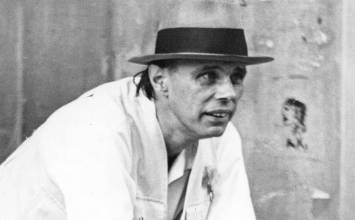
Joseph Beuys was a German multi- and mixed-media artist best known for incorporating ideas of humanism, social philosophy and politics into his art. Beuys practiced everything from installation and performance art to traditional painting and "social sculpture." He was continually motivated by the belief of universal human creativity.
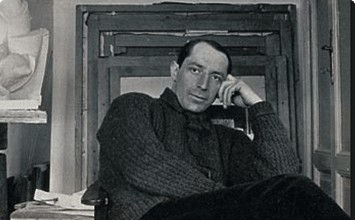
Umberto Boccioni was an Italian painter and sculptor. Like the other Futurists, his work centered on the portrayal of movement (dynamism), speed, and technology. After moving to Milan in 1907, he became acquainted with the Futurists, including the famous poet Filippo Tommaso Marinetti, and became one of the movement's main theorists.
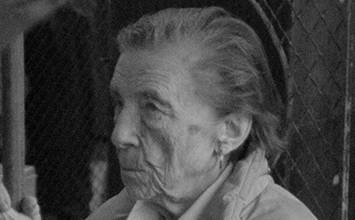
Louise Bourgeois is a French contemporary artist whose work adds a feminist perspective to Surrealism's themes of sex, childhood, and the uncanny. She is best known for her installation 'Cells' and her large-scale spider sculptures.
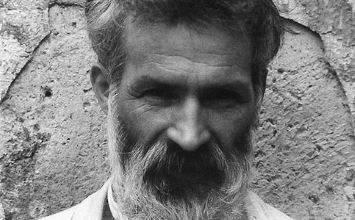
Constantin Brancusi, a Romanian artist working in Paris, was one of the founders of modern sculpture. His abstracted animals, portrait busts, and totem-like figures revolutionized the traditional relationship between the sculpture and its base.
Alexander Calder was an American artist who made important contributions to abstract sculpture, hanging mobiles, and kinetic art. His work reflects both modern and Surrealist influences.
John Chamberlain is best known for his sculptures made of crushed and twisted automobile parts, works that bring the formal qualities of Abstract Expressionist painting into three dimensions.
Joseph Cornell was an American artist, best known for his collage work and "shadow boxes," which were highly complex diorama-like constructions. Cornell incorporated found objects, old photos, newspaper clippings and other objects into these boxes, resulting in uniquely surreal, three-dimensional worlds. Cornell was one of the few American artists associated with Surrealism.
Salvador Dalí was a Spanish Surrealist painter who combined a hyperrealist style with dream-like, sexualized subject matter. His collaborations with Hollywood and commercial ventures, alongside his notoriously dramatic personality, earned him scorn from some Surrealist colleagues.
Edgar Degas was a French Impressionist painter, printmaker and sculptor with an extraordinarily long career from the mid 19th century until after WWI. As one of the original group of Impressionists, although he preferred to be called a Realist, he traveled widely and employed the use of photography in his creative process. He is most renowned for his painting and drawings of ballet dancers in rehearsal and performances in the theatre.
Jean Dubuffet was a French painter and sculptor, and arguably one of the most famous French artists of the mid-to-late-20th century. Dubuffet's paintings employed the impasto technique, in which oil paints were thickened by materials such as sand, tar and straw. He coined the term "Art Brut," otherwise known as "raw art."
The French artist Marcel Duchamp was an instrumental figure in the avant-garde art worlds of Paris and New York. Moving through Dada, Surrealism, readymades, sculpture, and installation, his work involves conceptual play and an implicit attack on bourgeois art sensibilities.
Dan Flavin was an American artist best known for his Minimalist constructions of color and light. Often using nothing more than a few dozen fluorescent bulbs for his work, Flavin was a crucial figure in the Minimalism of the 1960s and 70s. His light installations altered the physical exhibition space, and were designed as experiential art rather than visual art.
Paul Gauguin was a French Post-Impressionist artist who employed color fields and painterly strokes in his work. He is best known for his primitivist depictions of native life in Tahiti and Polynesia.
The Swiss artist Alberto Giacometti created semi-abstract sculptures that took up themes of violence, sex, and Surrealism. His famous later work is characterized by towering, elongated figures in bronze.
Eva Hesse was a major New York artist whose sculpture, assemblage, and installation brought issues of feminism and the body into Minimalism's formal vocabulary. She is heralded as one of the quintessential Post-Minimalist artists.
Jasper Johns is an American artist who rose to prominence in the late 1950s for his multi-media constructions, dubbed by critics as Neo-Dada. Johns' work, including his world-famous targets and American flags series, were important predecessors to Pop art.
Donald Judd was an early and influential Minimalist artist who made large-scale geometric objects, often of industrial materials and serially arranged on the floor or wall. He helped found the Chinati Foundation in Marfa, Texas, where many key works of Minimalism are installed.
Ibram Lassaw was an American abstract sculptor, associated with multiple movements such as Cubism, Surrealism and Constructivism. Lassaw's sculpture famously incorporated mixed metals, intricately woven to create what many perceived as abstract paintings in three dimensions.
Henri Matisse was a French painter and sculptor who helped forge modern art. From his early Fauvist works to his late cutouts, he emphasized expansive fields of color, the expressive potential of gesture, and the sensuality inherent in art-making.
Henry Moore was an English sculptor and artist. He was best known for his abstract monumental bronze sculptures. His forms are usually abstractions of the human figure, typically depicting mother-and-child or reclining figures.
Robert Morris is an American artist whose early L-beam and column sculptures were key works in Minimalism. His work also includes felt and fabric pieces, performance, body art, and earthworks, often with an emphasis on process and theatricality.
Louise Nevelson was a Russian-born American artist who worked in the WPA and was a member of the Abstract Expressionist scene. She is best known for her black-painted constructions of assembled crates, boxes, headboards, and other wooden materials.
Barnett Newman was an Abstract Expressonist painter in New York who painted large-scale fields of solid color, interrupted by vertical lines or "zips." His sometimes narrow or boxy canvases, part painting and part sculpture, were influential for Minimalism.
Isamu Noguchi was a Japanese-American modern artist. Best known for his organic, biomorphic sculpture works, Noguchi was also a furniture designer and landscape artist.
Picasso dominated European painting in the first half of the last century, and remains perhaps the century's most important, prolifically inventive and versatile artist. Alongside Georges Braque he pioneered Cubism. He also made significant contributions to Surrealist painting, and media such as collage, welded sculpture, and ceramics.
Robert Rauschenberg, a key figure in early Pop Art, admired the textural quality of Abstract Expressionism but scorned its emotional pathos. His famous "Combines" are part sculpture, part painting, and part installation.
The French artist Auguste Rodin is often considered the father of modern sculpture. His diverse ouevre includes traditonal styles, strongly allegorical work, and the fragments and textured physicality that are hallmarks of modernism.
Richard Serra is an American Process and Minimalist artist. His sculptures have ranged from hurled drips of molten lead to gigantic steel pieces installed in public places.
David Smith was an American artist who combined Surrealism and formal abstraction in his sculptures. His early works, small and with a craft-like aesthetic, give way later on to giant constructions of welded and burnished steel.
Frank Stella is an American artist whose geometric paintings and shaped canvases underscore the idea of the painting as object. A major influence on Minimalism, his iconic works include nested black and white stripes and concentric, angular half-circles in bright colors.