Below are biographies and analysis of the work of the artists who were central to Expressionism. If a major artist is missing from the list, The Art Story has not had a chance yet to research their life and art.
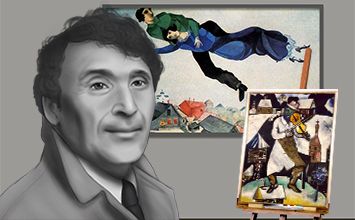
Marc Chagall was a Russian-born, Jewish-French artist that reached great popularity during the 20th century. Although his art is associated with several movements, Chagall is commonly grouped in with the German Expressionists. Much of his early work was credited with synthesizing visual elements of Cubism, Symbolism and Fauvism.
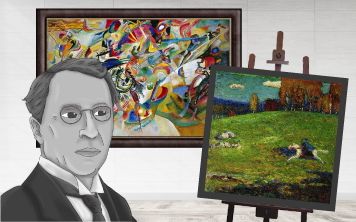
A member of the German Expressionist group Der Blaue Reiter, and later a teacher at the Bauhaus, Kandinsky is best known for his pioneering breakthrough into expressive abstraction in 1913. His work prefigures that of the American Abstract Expressionists.
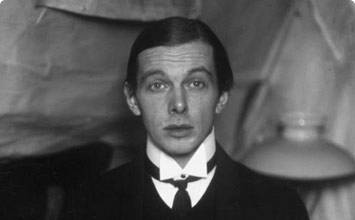
Ernst Ludwig Kirchner was one of the driving forces in the Die Brücke group that flourished in Dresden and Berlin before WWI, and one of the most talented and influential of the Expressionists.
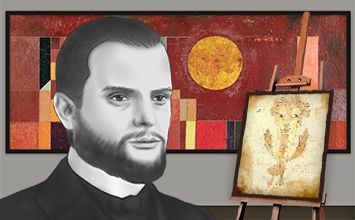
The Swiss-born painter Paul Klee worked in a variety of styles, including expressionism, geometric abstraction, and collage. His most famous works have a mystical quality and make use of linear and pictorial symbols.
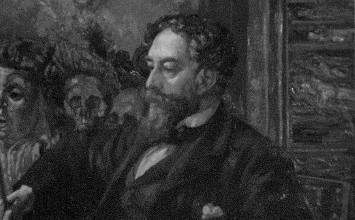
Norweigan painter and printmaker Edvard Munch was a pioneer of the German Expressionist movement. His works such as The Scream explored deeply psychological concepts in a Symbolist style.
Egon Schiele was an Austrian Art Nouveau painter. Schiele was initially taken under the wing of Gustav Klimt, but soon discovered a painterly style that was solidly expressionistic in form. While his style was reminiscent of Van Gogh, Klimt, Munch and others, Schiele shaped the female form in a uniquely non-representational manner, often twisting the body and face, making him an early proponent of European Expressionism.
Chaim Soutine was a Jewish Expressionist painter whose textured, impasto style was influential for later gestural painters. He is especially known for his portraits, landscapes, and studies of flayed meat.