Ask The Art Story AI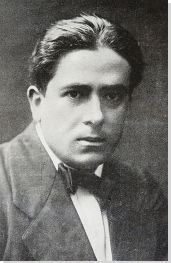



Summary of Francis Picabia
Once known as "Papa Dada," Francis Picabia was one of the principle figures of the Dada movement both in Paris and New York. A friend and associate of Marcel Duchamp, he became known for a rich variety of work ranging from strange, comic-erotic images of machine parts to text-based paintings that foreshadow aspects of Conceptual art. Even after Dada had been supplanted by other styles, the French painter and writer went on to explore a diverse and almost incoherent mix of styles. He shifted easily between abstraction and figuration at a time when artists clung steadfastly to one approach, and his gleeful disregard for the conventions of modern art encouraged some remarkable innovations even later in his career, from the layered Transparency series of the 1920s to the kitsch, erotic nudes of the early 1940s. Picabia remains revered by contemporary painters as one of the century's most intriguing and inscrutable artists.
Accomplishments
- In the 1910s, Picabia shared the interests of a number of artists who emerged in the wake of Cubism, and who were inspired less by the movement's preoccupation with problems of representation than by the way the style could evoke qualities of the modern, urban, and mechanistic world. Initially, these interests informed his abstract painting, but his attraction to machines would also shape his early Dada work, in particular his Mechanomorphs - images of invented machines and machine parts that were intended as parodies of portraiture. For Picabia, humans were nothing but machines, ruled not by their rational minds, but by a range of compulsive hungers.
- Picabia was central to the Dada movement when it began to emerge in Paris in the early 1920s, and his work quickly abandoned many of the technical concerns that had animated his previous work. He began to use text in his pictures and collages and to create more explicitly scandalous images attacking conventional notions of morality, religion, and law. While the work was animated by the Dada movement's rage against the European culture that had led to the carnage of World War I, Picabia's attacks often have the sprightly, coarse comedy of the court jester. They reflect an artist with no respect for any conventions, not even art, since art was just another facet of the wider culture he rejected.
- Figurative imagery was central to Picabia's work from the mid-1920s to the mid-1940s, when he was inspired by Spanish subjects, Romanesque and Renaissance sources, images of monsters, and, later, nudes found in soft porn magazines. Initially he united many of these disparate motifs in the Transparency pictures, complexly layering them and piling them on top of each other to provoke confusion and strange associations. Some critics have described the Transparencies as occult visions, or Surrealist dream images, and although Picabia rejected any association with the Surrealists, he steadfastly refused to explain their content. Picabia always handled these motifs with the same playful and anarchic spirit that had animated his Dada work.
- Picabia learned early on that abstraction could be used to evoke not only qualities of machines, but also to evoke mystery and eroticism. This ensured that abstract painting would be one of the mainstays of his career. He returned to it even in his last years, during which he attributed his inspiration to the obscure recesses of his mind, as he had always done.
Important Art by Francis Picabia

Portrait de Mistinguett
The style of this portrait, with its simplified forms and flat color, blends aspects of Symbolism and Fauvism and is typical of Picabia's maturing style as he began to try his hand at different approaches. Painted at a time when he was slowly building a conventional, successful career as an Impressionist, it might be taken as a sign of Picabia's frequent later habit of striking out in new and surprising directions. The model for the picture, Mistinguett, was a successful actress and singer, and was one of Picabia's first famous friends from the entertainment industry (she was at one time the lover of Maurice Chevalier). Independently wealthy, Picabia enjoyed the life of the bon viveur and was often drawn to music halls, nightclubs, circuses, and the cinema. He met Mistinguett during one of his visits to the Parisian revues. Instead of painting a realistic portrayal of her, he was much more interested in revealing the mood of the time by using dramatic color and composition.
Oil on canvas - The Solomon R. Guggenheim Museum, New York Collection

Dances at the Spring (La Danse a la Source)
Picabia met Marcel Duchamp around 1911, and Dances at the Spring, which echoes Duchamp's Nude Descending a Staircase (1912), points to the important impact this meeting would have on him. It is considered one of the best examples of Picabia's abstract art, expressing his inner experience through geometric forms. Picabia with particularly interested in representing motion on canvas, celebrating dancing on the surface. He sought to represent the balance between the figurative and abstract, the static and dynamic. Using vivid colors and fragmented angular planes, he painted the motion and the excitement of a peasant dance while he was on his honeymoon in the countryside of Italy. Two versions of the picture were painted, but one is lost; this version was exhibited at the important Armory Show in New York in 1913.
Oil on canvas - The Philadelphia Museum of Art

Très rare tableau sur la terre (Very Rare Picture on the Earth)
After World War I broke out, Picabia became fascinated with the idea of industrial objects as a pictorial source. He once wrote that "the machine has become more than a mere adjunct of life. It is really a part of human life...perhaps the very soul...I have enlisted the machinery of the modern world, and introduced it into my studio." His goal, he said, was to invent a "mechanical symbolism," and this piece is one of his most important examples, since critics have read it as an image of a sexual act rendered in mechanical terms. Although, at first glance, it might be hard to read so, Picabia may well have been inspired by his friend Marcel Duchamp to bury sexual references in images of machines. This work is also significant in that it is Picabia's first known collage (hence, as the title suggests, "very rare") since it contains two mounted wooden forms, and the frame is integral to the piece.
It stands to remember that Picabia loved machines, an in particular cars. He is said to have had a collection of over 100 automobiles. So here he is depicting the insides of his passion. Although he may be making fun of mankind, he may also, in true modernist fashion, be connecting technology and progress to human lives.
Oil and metallic paint on board, and silver and gold leaf on wood, including artist's painted frame - Peggy Guggenheim Collection, Venice

Ici, C'est Stieglitz (Here, This is Stieglitz)
At first Picabia worked closely with Alfred Stieglitz, who gave him his first one-man show in New York City. But later he criticized Stieglitz, as is evident in this "portrait" of the gallerist as a bellows camera, an automobile gear shift, a brake lever, and the word "IDEAL" above the camera in Gothic lettering. The fact that the camera is broken and the gear shift is in neutral has been thought to symbolize Stieglitz as worn out, while the contrasting decorative Gothic wording refers to the outdated art of the past. The drawing is one of a series of mechanistic portraits and imagery created by Picabia that, ironically, do not celebrate modernity or progress, but, like similar mechanistic works by Duchamp, show that such subject matter could provide an alternative to traditional artistic symbolism. In 1918, Picabia would make a portrait of his friend, the poet Guillaume Apollinaire. These kind of objectified portraits would be utilized by artists for years to come, one example out of the many that exist is the American modernist Arthur Dove and his Portrait of Ralph Dusenberry (1924).
Ink, graphite, and cut-and-pasted painted and printed papers on paperboard - Alfred Stieglitz Collection

Parade Amoureuse (Love Parade)
Picabia's mechanomorphic pictures suggest analogies between machines and the human form. To contemporary viewers they were scandalous in their rejection of the idea of the human soul and their emphasis instead on instincts and compulsions - both often erotic. In this work, Picabia blended male and female; the upper part in red might be considered female and the lower part in blue, male. The viewer can imagine the sound of hammering and the idea of a "sonorous sculpture," or a musical instrument. Of course, the most famous example of the male and female mechanized forms going through their motions and yet forever separated is Marcel Duchamp's The Bride Stripped Bare by Her Bachelors, Even (The Large Glass) (1915-1923) - on of the most important artworks in all of modern art.
Oil on canvas - Private Collection

Adam et Eve (Adam and Eve)
This enigmatic painting is part of Picabia's Transparency series, whose dream-like quality derives from layers of imagery that faintly suggest strange narratives. Though the title of this painting is Adam and Eve, it was inspired by Orestes and Electra, a classical Greek sculpture in the Museum of Naples, which portrays Electra and her brother considering revenge on their mother and stepfather for the murder of their father, Agamemnon. Classical subjects such as this were popular in the interwar period, yet most artists attempted to give new life to Classicism by adapting it to modern times. Picabia refuses this temptation, instead leaving the statue enigmatically layered with a smiling face and leaving us with a mystery. This clash of imagery from apparently different sources would be a major inspiration for later artists such as Sigmar Polke.
Oil on canvas - Private Collection

Deux femmes nues au bulldog (Women and Bulldog)
Picabia always had a fascination with popular imagery, often employing it as a means to undermine the grave seriousness and formal concerns of modern art. In this painting, part of a notorious series of realistic and erotic nudes that he painted in the early 1940s, he used pin-ups from 1930s "nudie" magazines. Though many believe they were painted for money (they were sold through an agent in Algiers), his close friends have maintained that Picabia always painted what he wanted and that they cannot be dismissed as anomalies in his career. Curators after the war often did put them aside in favor of celebrating Picabia's Dada years, yet since the 1980s these pictures have been an important influence on artists ranging from David Salle to John Currin, who have been fascinated by their early embrace of kitsch.
Oil on cardboard - Collection Centre Pompidou
Biography of Francis Picabia
Childhood
Francis Picabia was born in 1879 in Paris, the only child of a Cuban-born Spaniard, Francisco Vicente Martinez Picabia, and a Frenchwoman, Marie Cecile Davanne. Both his parents came from prominent European families, and Picabia was raised in an affluent household. Throughout his life, the family fortune allowed him to study, travel, and enjoy a luxury lifestyle. However, at the age of seven, his mother passed away of tuberculosis, and the following year his grandmother died. These losses ensured that Picabia's childhood would be a lonely one, and he was left in the care of his father, the chancellor to the Cuban Embassy, his uncle, Maurice Davanne, a curator of the Bibliotheque Sainte Geneviève, and his maternal grandfather, Alphonse Davanne, a wealthy businessman. Their house was known as the house of quatre sans femmes (four without women).
His uncle was an art lover and collector, who facilitated young Picabia's interests by surrounding him with works by classical French painters such as Fèlix Ziem and Ferdinand Roybert. His grandfather, a devoted amateur photographer, taught Picabia about photography, and Picabia would later use a camera to aid his work.
Early Training
In 1895, Picabia started attending the prestigious École des Arts Decoratifs, where recent alumni included Vincent van Gogh and Henri Toulouse-Lautrec. He studied under Fernand Cormon, Ferdinand Humbert, and Albert Charles Wallet for two years. He then worked at Cormon's studio with his classmates Georges Braque and Marie Laurencin for the next four years. During this time, he produced mostly watercolors and exhibited only once at the Salon des Artistes Francais. He quickly left painting traditional watercolors and transitioned towards Impressionism, influenced by Camille Pissarro and Alfred Sisley. He believed that "paintings should not represent nature, but the emotional experience of the artist," and that Impressionism was a tool to represent his ideals.
Picabia held his first solo show in 1905 at the Galerie Hausmann in Paris. The show exhibited 61 landscape paintings and received substantial acclaim. After the show, he became widely popular in the art scene, showing solo in Paris, London, and Berlin. However, in 1909, he abandoned the style that brought him initial success and moved towards more avant-garde styles, including Fauvism. This caused a break with his representation at the Galerie Hausmann. In the same year, he married Gabrielle Buffet, a musician, who brought music into his life. Through her, he saw the possible link between art and music. She also encouraged his interest in more avant-garde styles.
From 1909 to 1913, Picabia once again struggled to find the style best suited to express his developing concerns for the emotional and the intellectual, as well as the inner experience and the outer form. He jumped from one style to another, experimenting with Fauvism, Cubism, and abstract art. The attention from the art world that used to surround him decreased dramatically during his exploration. Despite his unstable prospects as an artist, Picabia and Gabrielle started a family, having their first child in 1910 and a second the following year. Picabia and Gabrielle joined the Sociètè Normande de Peinture Moderne, which met to foster and promote the theory of correspondance and the interdisciplinary relationship between all arts. It held annual exhibitions and other events, creating opportunities to network and socialize with other artists. In 1911, Picabia met Marcel Duchamp, beginning a long friendship that played a major role in both their lives and careers. Picabia also befriended the famous American writer Gertrude Stein who was supporting and spending time with modern artist in Paris. Stein tellingly said of him "that although he has in a sense not a painter's gift he has an idea that has been and will be of immense value to all time."
Mature Period
By 1912, Picabia shifted to the more radical style of Cubism, painting from his memories and experiences rather than drawing inspiration from nature. Showing at the seminal 1913 Armory Show in New York, he presented Danses à la source I (1912), Souvenir de Grimaldi (1912), La Procession Seville (1912), and Paris (1912). His works received mixed reviews, with some journalists dismissing his "color harmonies" as "a hoax." Despite the criticism in America, he overstayed his two-week visit and acquainted himself with Alfred Stieglitz and his Gallery 291.
When World War I broke out, Picabia left France to seek refuge first in Barcelona, then in New York, and later in the Caribbean. The war pushed him to find yet another style that would represent the era of industrialization. He showed the first of his machine paintings, his mechanomorphs, in 1916 at the Modern Gallery in New York. His relationship with his wife began to fall apart when he met Germaine Everling in 1917. His mental and physical health deteriorated into depression.
During his recuperation, Picabia shifted his focus from painting to writing. He published his poems in 1917 under the title Cinquante-deux miroirs (52 Mirrors) and began publishing a review, titled 391 after Stieglitz's 291 Gallery. 391 became Picabia's outlet for Dadaist writings and visual representation of its ideals, although he also contributed to other Dadaist publications, like André Breton's Litterature and the Dada revue, and published three volumes of poetry, Poèmes et dessins de la fille neé sans mère (1918), L'athlète des pompes funèbres (1918), and Rateliers platoniques (1918). In 1919, Picabia and Buffet officially separated. By this time, his machinist style paintings were already well known through the avant-garde publications. In 1920, Dada reached its peak and the visions of Dadaist "events", exhibitions, books, articles, and magazines became more defined.
After years of promoting itself as a movement of anti-art, Picabia felt Dada had become just another system of established ideas. In 1921, he attacked other Dadaists in a special issue of 391, Phihaou-Thibaou. After the break from Dada, he focused on exhibiting his paintings again. And in 1922, he had a show at Salon d'Automne of his machinist paintings alongside more figurative pictures inspired by Spanish themes. After leaving his colleagues of the past ten years, and in the search of new life with his new common-law wife, he left Paris for the south of France in 1925 and stayed on the Cote d'Azur for twenty years. Germaine and Picabia settled into a home in Cannes and hired a governess for their son, Lorenzo. Picabia fell in love with the governess, Olga Mohler, and left Germaine soon after. They officially split in 1933.
Late Period
In 1928, Picabia presented his Transparency paintings at the Galerie Theophile Briant. Film critic Gaston Ravel called them "sur-impressionism" as the paintings were said to have the neo-romantic look of superimposed film images. The Transparency series received warm acclaims from his peers, especially Duchamp. His then art dealer, Leonce Rosenberg, described it as "the association of the visible and the invisible... It is this notion of time added to that of space which precisely constitutes the doctrine of your art. Beyond the instantaneity towards the infinite, such is your ideal."
While living in Cannes he was quite the celebrity with the locals, receiving frequent visits from his famous friends, Jacques Douchet, Marthe Chenal, Pierre de Massot, and Marcel Duchamp. Picabia also enjoyed his wealth during this time, taking pleasure in throwing lavish parties, gambling, and collecting luxury cars and yachts.
When World War II started in 1939, the devastation reached Picabia and his lifestyle became quite modest. For the first time in his life, his primary source of income was from the sale of his paintings. In 1940, Picabia and Olga Mohler married. As it did whenever a major event occurred in his life, his painting style transformed once again. Many say that his paintings from the 1940s were purely for commercial value. He painted popular imagery from "girlie" magazines of movie stars and romanticized couples in a realistic style.
After the war, Picabia with briefly arrested by the French authorities for allegations that he was friendly with the Vichy (French Nazi) government during the war. He was release and never convicted but his reputation suffered, and Picabia never returned to France after 1945. There were various statements made by Picabia during the war that could be considered fascist, but as Picabia was ever the joking and anti-establishment personality, it is his hard to properly ascertain his position at that time.
At the end of his long career, Picabia once again changed directions, painting in abstract forms. He continued to exhibit his work in prominent Parisian galleries and published his writings until 1951, when he suffered from arteriosclerosis and could no longer paint. Prior to his death in 1953, he referenced Nietzsche writing "Where art ends, where life begins, I am the poet of my life".
The Legacy of Francis Picabia
Picabia did much to define Dada in Paris and New York, and his reputation as one of the movement's father figures has stayed with him. But it is perhaps the spirit that the movement encouraged in him - his anarchic spirit and his disrespect for conventional abstract modern art - that has yielded his greatest legacy. It is this spirit that shaped the Transparency series of the 1920s and the erotic nudes of the 1940s, both of which have proved hugely influential - the former on artists such as David Salle and Sigmar Polke, the latter on figures such as John Currin. When many artists thought abstract and figurative art should be separated, Picabia seemed to combine them. When others felt that the nude should remain a noble subject, he debased it. Picabia seems to have had a light-hearted and often cynical attitude to art-making, and while this put him at odds with many of his more serious peers, it is this attitude that seems so resonant to contemporary artists who not only have less faith in art's ability to change the world, but also have an attitude to museums and galleries that sways between the tolerant and the skeptical.
Influences and Connections


-
![Andy Warhol]() Andy Warhol
Andy Warhol -
![David Salle]() David Salle
David Salle -
![Sigmar Polke]() Sigmar Polke
Sigmar Polke ![Gerald Murphy]() Gerald Murphy
Gerald Murphy![Konrad Klapheck]() Konrad Klapheck
Konrad Klapheck


Useful Resources on Francis Picabia
- The Artwork Caught by the Tail: Francis Picabia and Dada in ParisOur PickBy George Baker
- Francis Picabia: Accomodations of DesireBy Sarah Wilson
- Francis Picabia His Art, Life, and TimesBy William A. Camfield