Ask The Art Story AI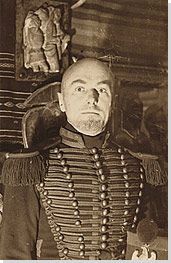



Summary of John Graham
John Graham was a Russian-born painter whose work as an organizer and writer helped bring widespread recognition to the New York School. His style was influenced by his acquaintances among the European avant-garde. He also embraced Surrealism, especially the dreamlike mystery and strange juxtaposition of objects characteristic of Giorgio de Chirico, and later the flattened forms and multiple vantage points of Cubism, drawing most heavily from the compositions of Pablo Picasso. Graham did not develop a signature style until he rejected modernism in the early 1940s; for the remaining 20 years of his career, Graham drew inspiration from Renaissance art and became devoted to painting realistic - though highly expressive - portraits of women. However, Graham's legacy within the New York School extends beyond his work as a painter. His lasting influence was in transmitting progressive ideas to younger artists in his circle and in his close friendship and role as mentor to painters like Willem de Kooning. As an early proponent of Surrealist techniques, like automatic writing, and his use of Analytic Cubism's reduction of images to two-dimensional forms, his influence laid the groundwork for the development of Abstract Expressionism.
Accomplishments
- Graham traveled to Europe frequently and was personally associated with members of the French avant-garde between the World Wars; he helped to spread Surrealist techniques, like automatic writing, to young American painters, including Stuart Davis and Arshile Gorky. Additionally, Graham brought back copies of Parisian journals like Cahiers d'Art, which provided American artists with their first glimpse of the groundbreaking Cubist work of their European contemporaries.
- Graham was interested in African art and its connection to modern painting, especially Cubism. Graham believed that so-called "primitive" art - especially African sculpture -was free from the traditional constraints of Western art history, and through its abstraction of the forms of the natural world it revealed the "inner truth" of its subject. Graham thought that abstract painting could achieve the same expressive effect, and believed that the work of Pablo Picasso best embodied this concept; he published an influential essay called "Primitive Art and Picasso" articulating this belief in 1937.
- Graham organized a major exhibition in 1942 at New York's McMillen Gallery called French and American Painters; this landmark show provided the first public exposure for Jackson Pollock and Willem de Kooning, who became the most influential painters of the New York School.
- Graham's own painting was overshadowed by his work as an organizer and as a writer. His 1937 work System and Dialectics of Art defined his theory on abstract painting and proved enormously influential on the budding painters of the New York School.
Important Art by John Graham

Still Life with Recorder and Cards
This painting was produced only a few years after Graham arrived in New York and began studying under John Sloan at the Art Students League. While Graham was already familiar with the work of artists like Kandinsky, Malevich and Picasso, this canvas is still representational and shows the influence of the still life work of painters like Cézanne, especially in the treatment of the folds of the tablecloth. The tablecloth, like the other objects, is arranged deliberately rather than naturally to provide an opportunity to foreground the transitions between light and shodow. Graham extends the table to the extreme lower edge of the picture plane, which flattens the composition into a series of geometric shapes, and consequently negates realistic depiction of pictorial space. As Graham's frequent transatlantic travels exposed him to the European avant-garde, his style grew significantly more abstract, and by the end of the decade his paintings strongly resembled those of Picasso.
Oil on canvas - Mark Borghi Fine Art Inc.

Iron Horse
Iron Horse clearly reflects Graham's interest in Surrealism, in particular the work of Giorgio de Chirico. Graham aggressively incorporated the styles of the European avant-gardes whom he met on frequent trips to Paris. Here, Graham placed a horse, suggestive of a sculpture or a carousel, in a deserted streetscape of nondescript geometric buildings cast in shadows under eerie, threatening skies. Though not present in this work, Graham often arranged additional objects around the central figure that seem discordant with the setting and contribute to the surreal, dreamlike mood of the image. Graham's absorption of European trends was hardly limited to de Chirico, and though Surrealist imagery continued to influence him for decades, within a year of Iron Horse his work began to reflect a growing obsession with Picasso.
Oil on Canvas - Michael Rosenfeld Gallery

Harlequin in Gray
During the 1920s, Graham traveled frequently to Paris and absorbed the styles of its most progressive painters, turning eagerly from de Chirico to Picasso. Though Picasso had developed cubism almost twenty years earlier, Graham began his emulation of Picasso's Blue and Rose Periods, of which the Harlequin was a major figure. For Picasso, the Harlequin was a kind of alter-ego whom he painted numerous times between 1901 and 1905, and periodically for the rest of his career. In Graham's Harlequin in Gray, the artist clearly adopted the subject matter of Picasso but additionally employed some of the distinctive techniques that would characterize his own portraiture of the 1940s and 1950s. The heavily shadowed face of the Harlequin is more abstract than the Picasso characters who inspired it, for example, and Graham set the Harlequin against a sparse, almost monochromatic background interrupted by a single geometric shape, a feature common in his later work.
Oil on Canvas - The Phillips Collection

Blue Still Life
In the early 1930s, Graham's work continued to reveal the influence of Picasso through his preoccupation with cubism and the simplification of form and color. In Blue Still Life , Graham stopped short of total abstraction, but essentially eliminated depth and reduced his palette to a single tone. The image of the fish and the table upon which it sits is represented by a minimum of lines and interlocking geometric shapes. This work reflects a major shift away from the more realistic works of the 1920s, presaging his abstract work throughout the 1930s and early 1940s.
Oil on canvas - The Phillips Collection

Embrace
Here, the interlocking shapes have been further simplified, but they are no longer hard-edged. Rather, their curves draw influence from Surrealism's biomorphic forms; further, the circles suggest eyes, and the title of the work seems to imply that it depicts two figures in an embrace. Even so, the canvas is highly abstract and completely two-dimensional. The heavier buildup of paint also prefigures the importance of material and surface in Abstract Expressionist painting.
Oil on canvas - The Phillips Collection

Rooftops
In this, Graham drew inspiration from an urban setting to create a cubist-influenced abstraction; the interconnected blocks of color show the clear influence of Picasso. Though the titular surfaces are discernable, Graham has flattened the picture plane and created no illusion of depth - an important signpost in the development of Abstract Expressionism. At the time, Graham was moving away from the pure abstraction that he practiced during the early 1940s, when he painted in a style similar to that of Arshile Gorky.
Oil on canvas - Seattle Art Museum
Biography of John Graham
Childhood and Education
John Graham was born Ivan Gratianovich Dombrowsky in Kyiv, Ukraine, to parents of minor Polish nobility. The date of his birth is disputed, though usually cited as anywhere between 1886 and 1888. After studying law, he became a cavalry officer during the First World War, winning a St. George's Cross for bravery. After the war, he supported the tsarist White Army and was consequently imprisoned by the victorious Reds. Upon his release in 1920, he immigrated to the United States with his wife and child.
Early Training
When Graham arrived in New York in 1920, he adopted the Anglicized first name John, and legally changed his full name in 1927 when he became a U.S. citizen, later explaining that "Graham" resembled his mother's name in Cyrillic. Graham had moved in artistic circles in tsarist Russia; he had seen the major collections of modern art assembled by fellow aristocrats, and was therefore familiar with painters like Kazimir Malevich and Wassily Kandinsky. With this background, Graham quickly became involved in the New York art world shortly after his arrival. Graham combined his outgoing personality and the noble swagger of a cavalry officer with a proclivity for exaggeration, and he easily made friends and found followers. He studied under Ashcan painter John Sloan at the Art Students League, where Graham befriended classmates and future Abstract Expressionists Adolph Gottlieb, Alexander Calder, and David Smith. Graham divorced and remarried in the mid-1920s, and for a time lived in Baltimore. At this point in his career, he was still influenced by Paul Cézanne, as revealed in his muted palette and concentration on still life arrangements. Nevertheless, Graham was consciously moving away from realism. In response to Cubist conceptions of geometrically defined composition, Graham began to attenuate and flatten his objects within the space of the canvas. He also began to use larger areas of single colors and to extend the foreground of the composition to the very edge of the picture plane, eliminating the illusion of depth.
Graham began to exhibit frequently in the second half of the 1920s, with shows at the Society of Independent Artists, Dudensing Gallery, and other venues in New York and in Paris. His paintings were also included in the inaugural Whitney Biennial in 1932.
Mature Period
Graham traveled frequently between Europe and the U.S., and his meetings with artists and intellectuals in Paris established him as a vital stateside conduit for the progressive theories of the European avant-garde. Assimilating the styles he observed in Europe into his work -most importantly the Cubist constructions of Pablo Picasso and Georges Braque, and the biomorphic forms and dreamlike imagery of Surrealists like Max Ernst and Giorgio de Chirico - Graham became a central figure in the development of the New York School. His firm grasp of European modernism is evident in his paintings from the late 1920s, which show mysterious settings characteristic of de Chirico. Later, Graham became interested in the analytic Cubism of Picasso, as he began to flatten his own compositional space into arrangements of interlocking geometric shapes. In the early 1930s, Graham initiated friendships with Stuart Davis, Arshile Gorky, and Willem de Kooning, to whom he communicated his own theories on the techniques and concepts of abstraction.
Graham divorced again in 1934 and married for a third time in 1936. Due to dire financial circumstances at the end of the 1930s, he spent some time living in Mexico. Graham supplemented his income as a Paris buyer of African art - primarily sculpture - on behalf of New York dealers, in the process becoming fascinated with this genre and its relationship to modernism. Like many contemporary thinkers, he saw an affinity between the sharp, abstract edges of African sculpture and the shapes of Cubism, an observation that became the basis for his widely-read paper Primitive Art and Picasso (1937), in which he championed the ability of Picasso to reveal the inner truth of objects with the same facility as "primitive" artists. That same year Graham also published the volume System and Dialectics of Art, which helped to define the nature of abstract painting and proved enormously influential during the following decade. In it, Graham praised abstraction for its ability to transform objects, create new meaning, and express the unconscious. It also established painting as a creative process, or journey, an idea that became the foundation for Harold Rosenberg's concept of Action Painting.
While his own painting continued to garner critical attention, Graham became more influential as an organizer who brought the work of the New York School artists to a wider audience of connoisseurs and critics. He curated a show at McMillen Gallery in 1942 called French and American Painters that presented the work of artists like Picasso and Braque alongside the work of younger American painters, providing a stamp of legitimacy for newcomers like Pollock and de Kooning. In fact, the exhibition was the first ever for Pollock and only the second for de Kooning. This exposure was a pivotal point both for them and for American painting as a whole. Graham continued to organize significant New York School exhibitions during the 1940s.
In his own work, in the 1940s, Graham made a radical reversion to realism, and devoted the remainder of his career to portraits of women. The reasons for this were not external, though Graham was involved in a painful divorce at the time. His decision was a conscious break from the mainstream and coincident with an increased interest in Renaissance painting and mysticism; around this time he began signing his works "Ioannus Magus" and "Ioannus San Germanus" after the supposedly immortal occult figure Count St. Germain. These actions can be considered a final part of his deliberate development of a personal legend since moving to America decades before. These works, traditional in comparison to the abstractions of his friends, occupied him for the remainder of his life. Graham's move towards realism was not critically popular, and was seen as a repudiation of his former position. Consequently, his work fell out of fashion. Graham also explicitly turned his back on Picasso during this period, calling him repetitive and one-dimensional in his cantankerous essay The Case of Mr. Picasso (1946).
Late Years and Death
Graham divorced for a third time and later lived with Marianne Strate. (Strate's daughter, Ileana Sonnabend, became a major New York art dealer and wife of Leo Castelli.) Graham never fully recovered after Strate's death in 1955. With his career as a prolific painter largely at an end, Graham moved to Paris in 1959, never to return to the United States, and died in London in 1961.
The Legacy of John Graham
Graham's considerable impact on Abstract Expressionism was due largely to his role as intercessor between the European avant-garde and the budding American art scene. His writing on art theory proved influential on not only the New York School, but also to later movements like Minimalism.
Influences and Connections


Useful Resources on John Graham
- John Graham, artist and avatarBy Eleanor Green
- The New York School: A Cultural ReckoningBy Dore Ashton