Ask The Art Story AI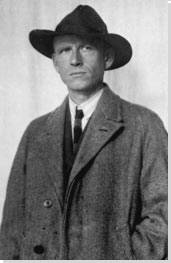


Summary of Otto Dix
Otto Dix has been perhaps more influential than any other German painter in shaping the popular image of the Weimar Republic of the 1920s. His works are key parts of the Neue Sachlichkeit ("New Objectivity") movement, which also attracted George Grosz and Max Beckmann in the mid 1920s. A veteran haunted by his experiences of WWI, his first great subjects were crippled soldiers, but during the height of his career he also painted nudes, prostitutes, and often savagely satirical portraits of celebrities from Germany's intellectual circles. His work became even darker and more allegorical in the early 1930s, and he became a target of the Nazis. In response, he gradually moved away from social themes, turning to landscape and Christian subjects, and, after serving in the army during WWII, enjoyed some considerable acclaim in his later years.
Accomplishments
- Otto Dix is one of modern painting's most savage satirists. After many artists had abandoned portraiture for abstraction in the 1910s, Dix returned to the genre and injected sharp caricatures into his depictions of some of the leading lights of German society. His other narrative subjects are remembered for their indictment of corrupt and immoral life in the modern city.
- Otto Dix was initially drawn to Expressionism and Dada, but like many of his generation in Germany in the 1920s, he was inspired by trends in Italy and France to embrace a cold, linear style of drawing and more realistic imagery. Later, his approach became more fantastic and symbolic, and he began to depict nudes as witches or personifications of melancholy.
- Dix always balanced his inclination toward realism with an equal tendency toward the fantastic and the allegorical. For example, his images of prostitutes and injured war veterans serve as emblems of a society damaged both physically and morally.
- Although Dix's work is often noted for its sharp-eyed depiction of the human figure, his early fixation with crippled veterans and his resort to caricature suggest that he was uncomfortable with celebrating the human body - and the triumphant human spirit - in his paintings.
Important Art by Otto Dix

Skat Players (Card-Playing War Cripples)
Showing both his Dadaist and Cubist influences, Dix makes a clear social statement using his bold technique in this painting. The skat players are war veterans horribly disfigured and crippled by their service, yet they are still able to play cards. Skat was a card game favored by Krupps, the German manufacturers of weapons. Dix uses the repetition of the cards, the chair legs, and the stumped limbs of the men to build a composition that is disturbing in form as well as content.
Oil on canvas with photomontage and collage - Staatliche Museen zu Berlin, Nationalgalerie

Portrait of the Lawyer Dr. Fritz Glaser
This picture of the lawyer Dr. Fritz Glaser is typical of Dix's portraiture from the early 1920s, in which he depicted his friends from the professional classes - doctors, lawyers and other notables who were also interested in the arts. Dr. Glaser assembled an extensive collection of art including works by artists such as Wassily Kandinsky, Paul Klee, and Emil Nolde. Dix shows him in front of the snow-covered facade of a typically ornate Dresden building, which appears to have been shattered during the war. Typical of his inclination toward caricature, the artist emphasizes the prominent features in Glaser's face, in this case his Semitic nose. The picture is also typical of the contradictions in Dix's life and work - contradictions between the good relations he had with many of Dresden's bourgeoisie, and the icy, critical tone with which his art remembered them.
Oil on canvas - Pompidou Centre, Paris

Portrait of the Journalist Sylvia von Harden
As a character of her time just as the woman herself, this image of Sylvia von Harden became iconic of the era. This portrait is perhaps Dix's most recognized. It was even referenced in the 1972 film Cabaret, set in Weimar-era Berlin. It is said that Dix painted this portrait after seeing von Harden in the street and exclaiming, "I must paint you, I simply must! You represent an entire epoch." She was amused. "So you want to paint my lackluster eyes, my ornate ears, my long nose, my thin lips. You want to paint my short legs, my big feet -- things that can only frighten people and delight no one?" Dix claimed that she was a perfect image for a society that was less concerned about a woman's outward appearance than her psychological state.
Oil on canvas - Pompidou Centre, Paris

The War
Dix was extremely affected by his war experiences and returned to them often for inspiration. The War shows men going into battle, it shows the aftermath of conflict, and it shows them returning from the field. Dix studied the Old Masters in both their subject matter and painting methods. This triptych is immediately reminiscent of grand history paintings as well as German Renaissance artist Matthias Gruenwald's Isenheim altarpiece (1506-15). Andrea Mantegna's Dead Christ (1480) is evoked in the lower panel showing the dead soldiers. Johann Wolfgang von Goethe, Friedrich Nietzsche, and the Bible also influenced Dix, thus associations of sacrifice and apocalypse with war imagery are common in his works.
Oil and tempera on wood - Staatliche Kunstsammlungen, Dresden

Seven Deadly Sins
In response to the Nazis' dismissing him from his teaching post at the Berlin Academy, Dix created this surreal satire on German politics. The figure of Sloth, depicted in the center, is a skeleton whose outstretched arms and scythe form a sort of swastika. Dix felt that this sloth or lack of concern and unwillingness to take early action by the German people had allowed Hitler's rise to power. The most poignant aspect of this picture is the representation of Envy, riding on the back of Avarice: he wears a Hitler mask. However, it wasn't until after the war that Dix painted in the telltale mustache.
Oil and egg tempera on wood - State Gallery, Stuttgart

Self Portrait with Palette before Red Curtain
Dix created many self-portraits throughout his lifetime. His maturity as an artist and a man can be chronicled in these reflective and intense studies of his own image. In this scene, he is fully facing the viewer, while in other portraits he is in profile. He is engaged in the act of painting, presumably the portrait itself. The dark and ominous view of the Alps can be seen out the window in the distance.
Mixed media on wood - Private Collection
Biography of Otto Dix
Childhood
Wilhelm Heinrich Otto Dix was born to Franz and Pauline Dix on December 2, 1891. His father was a mold maker in an iron foundry, and Dix inherited his strength of character and steel-blue eyes. From his mother, a seamstress, he received a love of music and poetry. He first displayed his artistic talent - especially in drawing - during elementary school. At the age of ten, he modeled for painter Fritz Amann and, impressed by his experience in the studio, decided to become a painter himself. His school art teacher, Ernst Schunke, guided his study and helped him get financial assistance. The award required that he learn a craft while he continued to study art with Schunke, so he became an apprentice decorator for four years.
Early Training
In 1909, Dix began his study at the Dresden Academy of Fine Arts. There was a huge creative output in the city, with a well-established and internationally renowned art and music scene that hosted large exhibitions and events. Dix did not struggle financially during art school; after the first semester he was exempt from paying fees and received a stipend. He also made extra money selling small portraits and genre paintings as well as coloring photographs. The Academy did not offer academic painting, but a more craft-oriented education. As a result, Dix was essentially a self-taught painter. But he did try sculpting under the guidance of Richard Guhr. A bust of Friedrich Nietzsche he created was purchased for the Dresden State Museum, but was later destroyed by the Nazis.
Through his intensive study of the Old Dutch, Italian, and German Masters, Dix taught himself how to paint with their methods - building up layers of paint to create depth and luminescence. However, he was also impressed by the Expressionists and the Post-Impressionists and in particular by a Vincent van Gogh exhibition that he saw in 1913. Primarily painting portraits and landscapes, Dix experimented with pen and ink and made his first prints in 1913.
Mature Period
When WWI began, Dix volunteered, somewhat eagerly, for service, and was drafted into a field artillery regiment; but by 1915 he was a machine gunner at the frontlines in France, and his experience of several horrific battles began to sour his enthusiasm. He was wounded several times, but managed to create sketches of many of the tragic scenes he witnessed. After the war, Dix resumed his art education with Max Feldbauer and Otto Gussman at the Dresden Academy of Art (1919-22).
In the aftermath of the war, Dresden was a shadow if its former self. No longer a seat of government, it suffered a huge drop in income and severe rationing. However, the artistic scene adapted and came back full force. With the value of money and political ideas in constant flux, Dix was driven to experiment. He had already taken on some elements of Futurism and Cubism during the war years; now he began integrating Dadaist and Expressionist elements into his work. In 1919, he co-founded the Dresdner Sezession Gruppe and participated in two of their exhibitions at the Galerie Emil Richter. He created surreal portraits and woodcuts, even delving into collage and mixed media.
After 1920, Dix synthesized and transformed these styles into his own brand of realism. Over the next few years, he composed some of his most disturbing canvases of sexual violence, murder, and cruelty. His Skat Players (Card-Playing War Cripples) (1920) is an example of this grotesque, yet poignant imagery. In 1921, he participated in exhibitions in Berlin and Dresden before moving to Düsseldorf in 1922. This relocation was an important shift as he studied with new teachers, Heinrich Nauen and Wilhelm Herbeholz, and became a part of both Johanna Ey's art salon circle and the German modernist Das Junge Rheinland group.
In 1923, Dix married Martha Koch and over the next decade had three children, all of whom were captured on canvas throughout their childhoods.
Throughout the 1920s Dix was included in many of the most significant exhibitions of new art in Germany. Most importantly, he was included in Neue Sachlichkeit, the exhibition at the Kunsthalle Mannheim in 1925 that gave its name to the movement that Dix would forever be associated with. Neue Sachlichkeit evolved out of Expressionism, but took on qualities of the classical, linear realism that was becoming prevalent in Italy and France.
It appeared more sober and realistic than previous styles, though in the hands of artists such as Dix and Grosz, it was no less critical. Some of the artists were called the Verists and could be aggressive and cynical, while others, less abrasive, were described as Magic Realists. Dix was a Verist and, with a critical spirit, he turned his portrait skills on the decadence and debauchery of Weimar society, with works like Metropolis (1927-28). Other notable canvases from this period include his triptych The War (1929-32).
In 1931, Dix was appointed a member of the Prussian Academy of Arts in Berlin. The same year he showed work in exhibitions all over Germany and at the Museum of Modern Art in New York. This renown was relatively short-lived, however, as the Nazis began to target him, regarding his art as immoral. As such, he was forbidden to exhibit in Germany, but he traveled to Switzerland several times during the mid 1930s and participated in several exhibitions there.
Forced to join the Nazi government's Reich Chamber of Fine Arts in 1934, Dix still managed to express himself. Seven Deadly Sins (1933) parodies Adolf Hitler as the embodiment of Envy. He was sent to a rural outpost and portrayed the surrounding landscapes in his work. In 1939, Dix was arrested on charges of plotting to kill Hitler, but the charges were dropped. He was captured by the French at the end of the war and held prisoner until 1946. Not wasting time, he painted a triptych for the prison camp chapel. After returning to Germany, Dix picked up where the war had interrupted his career. He resumed showing works and began making lithographs and documenting his war experiences and its effects in his work.
Late Years and Death
Much of Dix's later work focuses on post-war suffering, religious allegories, and Biblical scenes. Throughout the 1950s and '60s, he traveled a great deal and exhibited his work constantly. He was appointed to membership of many art academies in Florence, Berlin, and Dresden.
He continued making prints and participated in a short documentary film in 1965. In 1967, after traveling to Greece, he suffered a stroke, which paralyzed his left hand. He died in 1969.
The Legacy of Otto Dix
Dix is most remembered for the portraits he produced during the years of the Weimar Republic, pictures that have contributed to the enduring popular image of that famously decadent time in German history. They have also powerfully influenced portrait painters throughout the 20th century. Although the rise of abstraction in the 1940s and 1950s continued to erode the importance of figurative portraiture, the tradition of portrait painting has continued throughout the West, and many leading artists continue to speak of Otto Dix with reverence.
Influences and Connections
-
![Hieronymus Bosch]() Hieronymus Bosch
Hieronymus Bosch -
![Francisco Goya]() Francisco Goya
Francisco Goya -
![Oskar Kokoschka]() Oskar Kokoschka
Oskar Kokoschka ![Hans Baldung-Grien]() Hans Baldung-Grien
Hans Baldung-Grien


![Carl Einstein]() Carl Einstein
Carl Einstein


-
![Max Beckmann]() Max Beckmann
Max Beckmann -
![George Grosz]() George Grosz
George Grosz -
![Balthus]() Balthus
Balthus -
![Salvador Dalí]() Salvador Dalí
Salvador Dalí ![Rudolph Schlichter]() Rudolph Schlichter
Rudolph Schlichter


![Johanna Ey]() Johanna Ey
Johanna Ey