Ask The Art Story AI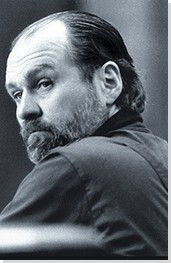

Summary of Carl Andre
During the 1960s and 1970s, Carl Andre produced a number of sculptures which are now counted among the most innovative of his generation. Along with figures such as Donald Judd, Sol LeWitt, Dan Flavin, Eva Hesse, and Robert Morris, Andre played a central role in defining the nature of Minimalist Art. His most significant contribution was to distance sculpture from processes of carving, modeling, or constructing, and to make works that simply involved sorting and placing. Before him, few had imagined that sculpture could consist of ordinary, factory-finished raw materials, arranged into straightforward configurations and set directly on the ground. In fact, during the 1960s and 1970s many of his low-lying, segmented works came to redefine for a new generation of artists the very nature of sculpture itself.
Accomplishments
- Andre was a sculptor who neither carved into substances, nor modeled forms. His work involved the positioning of raw materials - such as bricks, blocks, ingots, or plates. He used no fixatives to hold them in place. Andre suggested that his procedure for building up a sculpture from small, regularly-shaped units was based on "the principle of masonry construction" - like stacking up bricks to build a wall.
- Andre claimed that his sculpture is an exploration of the properties of matter, and for this reason he called himself a "matterist." Some people have seen his art as "concept based," as though each piece is merely the realization of an idea. But for Andre, this was a mistake: the characteristics of every unit of material he selected, and the arrangement and position of the sculpture in its environment, formed the substance of his art.
- In 1966, Andre began to describe his work as "sculpture as place," a phrase which alludes both to the fact that his sculptures were produced simply by positioning units on the floor, and to their "place generating" properties. Andre defined "place" as "an area within an environment which has been altered in such a way as to make the general environment more conspicuous."
- Andre insisted on installing all new work in person, and his configurations were always carefully attuned to the scale and proportions of their immediate surroundings. However, once installed, his sculptures could be dismantled and reconstructed in other locations without his direct involvement.
Important Art by Carl Andre

Cedar Piece
Andre recreated this sculpture for the exhibition "Nine Young Artists" at the Hudson River Museum in 1964, and it became the first work of his to be exhibited in public. It consists of equal lengths of standard lumber, into which he cut simple woodworker's joints so that the sculpture could be slotted together, and then detached for the purposes of portability.
The initial version dates from 1959 when he was in close contact with Frank Stella and was observing Stella complete his paintings using repeated, even brushstrokes. Cedar Piece can be understood as Andre's early attempt to construct sculpture in a similar fashion, also by building up a form from identical units. Andre liked this approach because once he had established the initial premise, he did not have to make any further decisions about the formal composition of the sculpture. In fact, it could be argued that the sculpture composes itself, in that the shape of the St. Andrews cross formed by the ends of the beams results from the regular positioning of the joints.
Cedar - Oeffentliche Kunstsammlung Basel, Museum fur Gegenwartskunst, Switzerland

Equivalent I-VIII
Andre frequently worked in series, producing an entire exhibition of sculptures from different arrangements of the same material, as he did for his influential exhibition at the Tibor de Nagy Gallery in New York in 1966. Here, each work consists of an equivalent number of white sand-lime bricks (120), although the eight stacks are all arranged according to a different rectangular formation. These eight sculptures are arguably the first sculptures that clearly demonstrate Andre's definition of "sculpture as place." By spreading out the bricks over the floor of the gallery, Andre wanted to generate a sense of extreme horizontality, reminiscent of the level of water. This led him to consider the layer of space between the sculptures to be just as substantial as the bricks themselves, and to emphasize this feature of the sculpture he coined the aphorism: "a thing is a hole in a thing it is not." However, at the end of the exhibition this feature of the installation was lost, because each sculpture was sold individually. Perhaps for this reason Andre remade a version of this work in 1995 called Sand-Lime Instar, in which the entire installation is considered a single sculpture.
Sand-lime bricks - Different Museums and Private Collections

Spill (Scatter Piece)
Andre always claimed that he looked to the properties of an individual unit or module to determine how it should be combined with others, and since these small plastic counters were too light and too small to be set down one by one like tiles in a mosaic, he decided merely to empty a canvas bag of them over the floor. This work became extremely important for defining "process art", a term which artists and critics used in the late 1960s to distinguish recent works which did not seem to fit with definitions of Minimal art. Minimalism was often associated with sculptures which had rigid, clearly defined geometric forms, and yet artists were increasingly producing objects which appeared simply to have been scattered, or dropped, or were made from materials which had no fixed shape. These sculptures were consequently described in terms of "process," as a way of highlighting that the procedure deployed for the construction of the piece was more important than the finished form.
Plastic blocks and canvas bag - Kimiko and John Powers

144 Aluminum Square
Andre once claimed that the "periodic table of elements is for me what the color spectrum is for a painter," and many of the materials which he uses for his sculptures are pure elements selected from the table. Andre first exhibited 144 Aluminum Square alongside identically-proportioned sculptures in steel (which actually is an iron alloy and not an element) and zinc. Visitors were encouraged to walk over the plates and compare the different physical properties of the three metals.
Aluminum - Norton Simon Museum of Art, Pasadena, California

37th Piece of Work
Initially installed in 1970 at the Guggenheim Museum for his first solo exhibition in a public museum in the United States, this sculpture is very much a museum piece. It includes the six most commonly-used metals from the periodic table, each of which is paired with another, according to all thirty-six possible combinations. In total the work consists of 1296 individual plates.
Aluminium, copper, steel, lead, magnesium and zinc - Collection François Pinault, Venezia, Italy

Stone Field Sculpture
This is Andre's only permanent public sculpture: it is sited in downtown Hartford, close to the Wadsworth Atheneum on a narrow, nondescript strip of grass between Center Church and its accompanying burial ground, and Gold Street. The work consists of thirty-six immense boulders, which were dug up at a local gravel pit and had been discarded by the quarry owners. Andre placed the largest stone (which weighs eleven tons) at the apex of the triangular plot, then set down the next two in a row running across the site, then the next three, continuing incrementally up to the eighth row, which is comprised of the smallest stones. While the sculpture is typical of Andre's fascination with sorting and arranging objects, it can also be read as a subtle meditation on the contrast between geological and human time.
Screen print on paper mounted on Sintra with hand painting - City of Hartford, Connecticut
Biography of Carl Andre
Childhood
Carl Andre was the youngest of three children (and the only boy) born to George and Margaret (née Johnson) Andre, in Quincy, Massachussetts (a suburb of Boston). George had immigrated to the United States from Sweden, and designed freshwater plumbing systems for ships. Demand for skills in naval plumbing grew significantly in the post-war period, and George began earning enough money that Margaret was able to leave her job as an office manager and focus on taking care of the family. Carl later recalled "My father always said, 'I am old school and European, and my wife does not work.' He had a hard time seeing other people's points of view."
George was also an amateur carpenter, and had a woodshed in the basement of the family home, where Carl would spend time and first became interested in building things. He also shared his father's love of poetry, and later went on to write his own poetry, which was well-received.
Education and Early Training
After school, Andre briefly attended Kenyon College in Ohio, but soon dropped out. In 1954, he went to the UK to visit an aunt. While there, he visited Stonehenge, which he later cited as a pivotal experience that convinced him to pursue sculpture. Back in the US, he spent the next few months working in Quincy, and between 1955 and 1956 he completed his military service at Fort Bragg in North Carolina. Afterwards, he again attempted to go to school, enrolling at Northeastern University in Boston, but once again, dropped out after a short time.
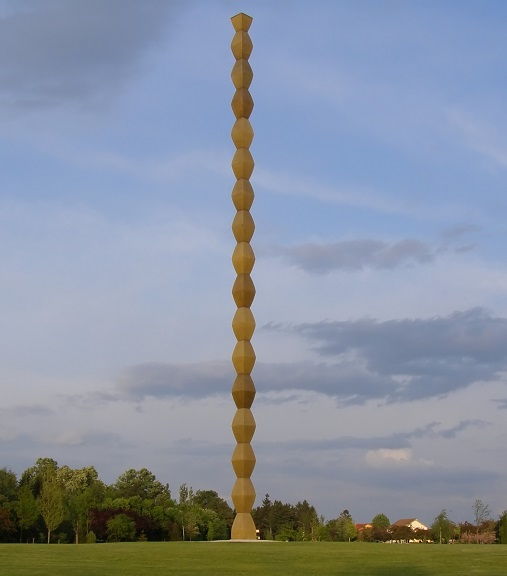
In 1957 Andre moved to New York with the intent of devoting more time to writing poetry and making art. Living in Lower Manhattan, his circle of friends included filmmaker, photographer, and writer Hollis Frampton, and the painter Frank Stella, both of whom had also attended Phillips Academy. Frampton introduced Andre to the poetry and essays of Ezra Pound, and it was through Pound that Andre became increasingly interested in the work of the sculptor Constantin Brâncuși. Stimulated by the Romanian modernist, Andre began to experiment with found blocks of wood, sawing and carving them into simple geometric shapes.
Andre's approach to art-making was strongly influenced by the example of Frank Stella. At the end of the 1950s Stella was gaining increasing recognition for his Black Paintings, a series of works which consisted solely of uniform parallel bands of black enamel paint. Both Frampton and Andre were fascinated by the disciplined, workmanlike manner in which their friend painted: in their mind this was a technique which left little scope for artistry. Andre described Stella's technique as "constructivist" as a means of emphasizing that he built up his work from a combination of "identical, discrete units," and Andre's Pyramid sculptures from 1959 might be considered an important early attempt to produce work in a similar fashion. In fact, Stella allowed Andre to use his studio whenever he wasn't around, so that he could have a space in which to work on large projects, from 1958-60.
It was, however, not through sculpture but with words and text that Andre continued to explore the ramifications of a "constructivist" technique. In fact between 1960 and 1964 Andre made few sculptures. During these years he worked as a freight brakeman on the Pennsylvania Railroad and had little space or money for producing three-dimensional art. Instead he started to "construct" poems from words or phrases which he judiciously selected from particular texts. He would then write down these fragments, arranging them on the page according to a pre-ordained protocol, such as by word-length, or alphabetically, or following a simple mathematical system. Many of these poems were produced using a typewriter, and from the late 1960s onwards, Andre frequently exhibited the manuscripts of these text-based works alongside his mature sculptures.
Mature Period
Andre was well on his way to thirty before any of his sculptures were exhibited publicly, although the relative obscurity he had enjoyed up to that point had afforded him ample time to read and experiment widely. Therefore when opportunities to exhibit did start opening up from 1964 onwards, Andre had already refined a trajectory for his art which would later come to appear impressively coherent. By the mid 1960s he was already well equipped with a startlingly articulate rationale for his work, and it was largely thanks to this that he found himself able to establish his reputation with a level of self-assurance that was breathtaking.
By 1966 Andre had decided that his sculptures would develop no further. He explained to the critic David Bourdon, in Artforum in October 1966, that his very early work could be described as "sculpture as form," since it had involved cutting and shaping materials. After that he had progressed to "sculpture as structure" - a stage in which he produced works not by cutting or shaping, but by stacking up identical units. The three sculptures, Coin, Crib, and Compound (all 1965), made from nine-foot Styrofoam beams that Andre exhibited at the de Nagy Gallery in 1965, might be considered examples of the latter: each work exemplified a different building construction technique. Yet from 1966 onwards, Andre explained that he had dispensed with both form and structure, and that by laying units horizontally along the ground his work became solely the manifestation of "place." In 1967 Andre began to make sculptures using quarter-inch metal plates, and "sculpture as place" became synonymous with work which stretched out horizontally over the plane of the ground.
From the mid-1960s onwards, the underlying premises of Andre's art remained practically unchanged, inasmuch as the procedure for making the work was not altered. This meant that Andre's work tended to display a range of distinct characteristics which make it instantly recognizable. For instance, much of his mature sculpture was extremely low-lying, undermining all traditional associations about sculpture's relation to the upright human body. When you stand in front of one of Andre's metal floor-based works, there is no form which "faces" you. Instead you are often permitted to walk over his metal sculptures, and stand in the space where sculptural substance usually resides.
Largely because his work is so low-lying and always presented on the ground, his work can often seem extremely unobtrusive. This is a quality which Andre also cultivated. He was never interested in making vast, monumental works which dwarf the viewer. Instead, Andre often said that he liked to make sculptures which you can be in the same room with, but ignore if you choose to.
However, it would be wrong to imply that there were not substantial variations in the appearance of his sculpture, and over the years Andre produced a wide variety of families of works, using many differing materials and configurations. For instance, when he used thick blocks of cedar, or cubes of granite and limestone, or especially shiny metals, the results could look opulent and grand. Yet on other occasions he made sculptures from cheap, almost worthless materials, including scavenged objects such as bent, rusty nails, or lengths of plastic tubing. In fact, even sculptures made from the same type of unit could look entirely different depending on how Andre chose to install them. For example, three plates of copper pushed up against the wall in a shadowy corner of a gallery would look entirely different to thirty-three plates of the same material, laid out into a rectangular formation and set right in the middle of the room. To a casual observer, all Andre's work might look very similar, but Andre wanted viewers to slow down and focus on small, subtle differences - and to reflect on these.
In 1969 Andre became closely associated with the New York-based Art Workers' Coalition. The group lobbied the city's major public galleries for increased artists' rights and an end to sexism, racism and oppression within the art world. It was arguably during this period that Andre's eminence among fellow artists and North American and Western European art institutions was at its highest.
Late Period and Death
In 1985, Andre's artistic reputation was severely damaged by a tragic event in his personal life. His then-wife (indeed his third wife, following Barbara Brown, a teacher, and Rosemarie Castoro, a painter, both of whom he divorced), the Cuban-American artist Ana Mendieta, whom he had married that same year in Rome, fell thirty-four stories to her death from their apartment window on Mercer Street in Greenwich Village. Andre was arrested for her murder, and, although he was fully acquitted in 1988, he became a hated figure for those who were close to Mendieta. In their eyes he came to personify many of the oppressive, establishment values against which he and the Art Workers' Coalition had campaigned in the late 1960s. Friends to the couple have reported that the relationship was volatile, catalyzed by the fact that both drank heavily, however it remains unknown whether Andre played a role in her death, or if it was a suicide or an accident.
Following this ordeal, Andre withdrew significantly from public life and the art world, exhibiting less frequently and spending more time abroad. When he did hold exhibitions, protesters often appeared, vocally holding Andre responsible for Mendieta's death. In a 2011 interview, the artist said "It didn't change my view of the world or of my work, but it changed me, as all tragedy does." He did, however, continue to live at the Mercer Street apartment. He also remarried, in 1999, to artist Melissa Kretschmer, with whom he remained for the rest of his life. Andre passed away at a hospice facility in Manhattan on January 24, 2024, at the age of eighty-eight.
The Legacy of Carl Andre
From the late 1960s onwards, Andre's art became an important reference point for many subsequent artists both in North America and in Western Europe - largely because he was seen to have reduced sculpture to its essential state. While Andre himself saw this as the end-point of his art, many sculptors took his insights as the starting-point for their own practice, and built up from the principles which Andre had laid down. One artist heavily influenced by Andre was Richard Serra, whose Colombino di Firenzuola (1982) at the Gori Collection of Site-Specific Art in Tuscany is highly reminiscent of Andre's Stone Field Sculpture (1977), for instance.
Andre's creative output includes some 2000 sculptures, and about as many poems. His sculptural work was not always well-received, for instance with critic Peter Schjeldahl writing in 1970 "Andre is not much fun. Puritanically severe, his work rewards sensitive perusal with some nice surface effects and a certain feeling of unease. The qualities it negates are almost more palpable than the rudimentary qualities it advances, presenting the case of an artist whose considerable formal and stylistic intelligence has been dedicated to the virtual elimination of form and style." However, today Andre is recognized as a pivotal figure in the Minimalist movement, with artist and writer Wallace Ludel calling him "the American sculptor who helped define the Minimalist movement and whose quiet, material-driven work forever changed the lexicon of contemporary sculpture." Similarly, curator and arts writer Randy Kennedy asserts that "Mr. Andre helped establish the terms of Minimalism, which shifted the focus of art in the 1960s away from the heroic gestures of Abstract Expressionism toward rudimentary forms and industrial materials. He was a practitioner of the movement at perhaps its most austere, working primarily from a limited range of elemental metals along with granite, wood and brick." In Andre's own words, "What I wanted was a sculpture free of human association, a sculpture which would allow matter to speak for itself, something almost Neolithic."
Influences and Connections
-
![Ad Reinhardt]() Ad Reinhardt
Ad Reinhardt -
![Robert Morris]() Robert Morris
Robert Morris -
![Constantin Brâncuși]() Constantin Brâncuși
Constantin Brâncuși -
![Frank Stella]() Frank Stella
Frank Stella ![Ezra Pound]() Ezra Pound
Ezra Pound


-
![Constantin Brâncuși]() Constantin Brâncuși
Constantin Brâncuși -
![Frank Stella]() Frank Stella
Frank Stella ![Hollis Frampton]() Hollis Frampton
Hollis Frampton


-
![Minimalism]() Minimalism
Minimalism -
![Conceptual Art]() Conceptual Art
Conceptual Art -
![Land Art]() Land Art
Land Art -
![Post-Minimalism]() Post-Minimalism
Post-Minimalism ![Landscape Architecture]() Landscape Architecture
Landscape Architecture


Useful Resources on Carl Andre
- About Carl Andre: Critical Texts Since 1965Our PickBy Paula Feldman, Alistair Rider, Karsten Schubert
- Carl Andre and the Sculptural ImaginationBy Ian Cole
- Naked by the Window: The Fatal Marriage of Carl Andre and Ana MendietaOur PickBy Robert Katz
- Against KandinskyBy Margarita Tupitsyn, Margartia Tupitsyn
- Cuts: Texts 1959-2004By Carl Andre, James Meyer
- Carl AndreBy Carl Andre
- LeWitt x 2Our PickBy Sol Lewitt, Carl Andre, Donald Judd
- Carl Andre: QuincyOur PickBy Carl Andre
- Carl Andre: Glarus 1993-2004Our PickBy Eva Meyer-Hermann, Carl Andre
- Carl Andre: Sculpture 1958-1974By Carl Art - Andre
- Carl Andre: Sculpture 1959-1977
- Carl Andre: Sculpture as Place, 1958-2010By Jeremy Sigler and Michelle Piranio
- Carl Andre: Things in Their ElementsOur PickBy Alistair Rider
- Carl AndreBy Roland Möning and Letizia Ragaglia